
Tags
bible, Catholic church, Catholicism, Christianity, faith, history, jesus, Reformation, Trent
Were the changes in the Roman Catholic Church during the time of the Council of Trent solely the result of the Protestant Reformation?
That is the question that Fr. Robert Bireley poses in his book, “The Refashioning of Catholicism, 1450-1700: A Reassessment of the Counter Reformation”, (The Catholic University of America Press, Washington, DC; 1999). Bireley believes that a positive answer to that question neglects other equally compelling forces, individually and in combination, that were at work on the Roman church. And he believes those forces were the rise and concentration of political power in the state; the population explosion; the expansion of Europe into Asia, Africa and America; the Renaissance and lastly, the Reformation. And he aptly covers this expansive material in less than two hundred pages.
There are several themes that I thought were particularly interesting. The first is the historic relationship between local bishop and the pope. At the beginning of the period under review, the local office of bishop was little more than an annuity to the person holding the office. Therefore, the office was subject to political appointment and the office holder need not even reside in the diocese over which he was appointed. Further, he might hold several such “benefices” simultaneously. The net pastoral effect was that the local Roman Catholic may never see his bishop. This secularization of the episcopacy made the office into a political football. If a pope was fearful that a certain secular ruler may call a church council against him, he would use the bishops as a bargaining chip. Conversely, if a political ruler, having jurisdiction over the bishops in his province needed to bargain with the pope of Rome, the bishops were a handy token. The net effect was that the pope of Rome diminished the proper influence of the bishop on his flock and helped to create a theological void.
The second theme of interest is that this vacuum thus created was filled by the rise of new religious orders – the Jesuits, Capuchins, Carmelites, etc. Indeed, these orders tended to provide competition to the local bishop who did not to receive any support from Rome for his local authority. But these Orders – especially the ones that came into existence during this period – were affected by what Bireley calls the “individualism of the Renaissance.” Said individualism caused these new groups to become cults of a single personality: the Jesuits – Ignatius of Loyola; the Ursulines – Angela Merici. The net of it was that the local congregation, cut off from Rome and likely divorced from their local bishop became clay in the hands of these religious orders that may very well spread differing messages. Fr. Bireley says it well: “Catholicism was hardly monolithic.”
The author’s treatment of the Council of Trent is likewise insightful.
One of the many issues that Trent sought to resolve was the relationship of bishop to pope. Because of the abuse of pluralism – the holding of several benefices by one absentee bishop – the council declared that the bishop must reside in his diocese ‘by divine appointment.” However, if the episcopacy was indeed divinely appointed, how could the pope have any jurisdiction over it at all? Was the Pope divine? So, in the end, the exact relationship went undefined despite the lampooning that Rome endured from the Protestants on exactly this issue.
What was particularly surprising was Bireley’s description of Rome’s variegated response to slavery. It wasn’t until 1542 that Rome outlawed the enslavement of American Indians. Bireley is the master of understatement when he writes, “This was not the case with black Africans…There were Catholic voices that protested against the African slave trade, but they were few and they were not loud.” (pgs. 162, 163). Bireley offers no reason for the racial dichotomy but one might reasonably be deduced. Charles V was not pleased with Rome’s interference into the affairs of his empire. France had been chiefly involved in the trade of African slaves and his Spanish interests in America were its chief beneficiaries. Therefore, Roman interference in Charles’s overseas adventures may have been deemed politically unwise.
But there may be an even deeper reason.
One of the shortcomings of Bireley’s book is its failure to mention Rome’s enslavement of the Jews in the Papal States during the period of his investigation. For Rome, therefore, to speak out too loudly against slavery would inevitably bring scrutiny into its own practices. And, as history has shown, that scrutiny will not be kind to Rome’s 700 year imprisonment of the Jews in the Papal States and elsewhere.
The only error that I found was this. Fr. Bireley attributes to Robert Bellarmine an interpretation of the Council of Trent that “Scripture was not to be interpreted against the general sense of the early Fathers of the Church.” (p. 194) Whether Bellarmine is wrong and accurately understood, or whether Bireley has got Bellarmine wrong will be a matter for further investigation. But the standard of Trent regarding the interpretation of Scripture is that it must be done according to the “unanimous consent of the Fathers”, not the general sense.
There is much more of interest in this book and I can recommend it to your reading. Fr. Bireley presents his case admirably and according a principle he describes early on: “…historical scholarship ought to pursue historical truth objectively…” (p. 5) and he does so admirably. If the study of the Reformation period is an interest of yours, this book should be on your shelves.
 A lot of ink and wind has been expended castigating President Trump for (rightly) withdrawing from this accord. But I daresay few people have read it, which is unfortunate because it is a short document, at just over two dozen pages. When one reads the document,
 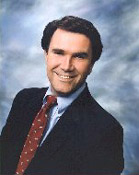 ose teaching has impacted thousands both during and after his life. My own introduction to Dr. Bahnsen happened rather serrendipitously and I can remember the moment, exactly. It was late one evening and I was doing some research on the internet. I stumbled upon a website (that no longer exists) and somewhere near the bottom of the bar on the right side, I spied a sermon entitled, “Was the Reformation Necessary?” If I recall, that speech was about an hour long and I was fascinated. Thereafter, I found many of the 1,500 lectures and classes Dr. Bahnsen has left for us and my interest contiued to grow. Dr. Bahnsen’s lectures often required several listenings as he was a first rate scholar and an expert in advanced theological and philosophical concepts. But once his teachings are comprehended, their power and applicability is unmatched.
