• About

anactofmind

~ If there is anything in the world that can really be called a man's property, it is surely that which is the result of his mental activity. – Arthur Schopenhauer

anactofmind

Author Archives: Paul Bassett

The Crisis of Authority in Catholic Modernity

14 Monday Jul 2014

Posted by Paul Bassett in Charles Chaput, Papacy, Roman Catholicism

≈ Leave a comment

Tags

Francis Oakley

The post-Vatican II era has created a serious problem for Roman Catholics.  And that problem is precisely how to reconcile the claims of the church with the facts of history – and sometimes with the facts of its own history!   It is not that this is a new problem but rather that the world and how the church relates to the world has so changed as to now lay bear the glaring contradicitons that previoiusly had been covered over by structures of authority[i] which Vatican II has made more transparent.   Perhaps the most obvioius examples are the claims made by Vatican I regarding the papacy and its foundation, continuity and extent.  As it turns out none of those claims is supportable in history and modern Roman Catholic scholars are now free to plumb the depths of these errors however much they are enshrined as “de fide” pronouncements.

But what is new in all this is not the errors but the fact that they can be discussed openly.  We know from history that John Calvin himself cajoled the Roman Church for its false claims and showed in his famous letter to King Francis I that all ordinations after the Council of Basel were fraudulent.[ii]   Calvin showed how political machinations and not “apostolic succession” had made necessary the removal of some popes and the appointment of others with little regard for ecclesiastical involvement.   And that those depositions and appointments had broken whatever alleged continuity Rome claimed theretofore from the Apostles.  And yet centuries later Vatican I was able, with full force of papal authority, to claim that all popes are “successors” of Peter that it “has always been necessary for every church…to be in agreement with the Roman church….”[iii]

And so it was with great interest that I found a collection of essays by legitimate church historians dealing with exactly these matters and it is their title that I have borrowed for this post[iv].  The first essay written by the eminent scholar, Francis Oakley[v], focuses on how the Council of Constance is a roadblock to modern Roman Catholic claims to authority.

Oakley begins with a fascinating expose of John Henry Cardinal Newman’s famous, Essay on the Development of Doctrine. In what seems a tangential departure from the period of Constance, Dr. Oakley shows how Newman misunderstood “development” in the context of Catholic history.  According to medieval scholastics (Oakley names Bonaventure, Aquinas and Scotus) Catholic doctrines were “immutable”, never changing.  So when something appeared to be different than what the church had proclaimed to be “de fide”[vi] these scholars insisted that whatever the variation it was either “implicit” in the original teaching or could be explicated therefrom.  The point is that the teaching itself was considered eternal and unalterable – it did not develop as Newman would have it.   This was the view of the Roman church from medieval times through the period Oakley refers to as the “second scholasticism” when” Spanish theologians in the 17th century”…had been at pains to make clear that, in so doing, it (the church) was not attempting to supplement revelation that was, in fact, immutable.”  Oakley uses this to lay the foundation for what will follow:

When he (Newman) wrote that work, he appears to have known nothing about the older scholastic views on doctrinal development.[vii]


The Politics of Oblivion

 The ignorance of history displayed by Newman and decried by many of his critics unfortunately continues to this day.  I have written how the Archbishop of Philadelphia mischaracterizes his church’s history here and here in our time.   And Oakley cites the work of the distinguished Catholic theologian John Noonan who has documented “the convoluted process whereby a pattern of behavior once denounced (by Rome) as contrary to nature has modulated across time into the routinely acceptable….”[viii]    All of this is to say that there has been an odd combination of historical forgetfulness in the Church of Rome.

So how does this happen?

…it may largely be due to the empire that the present continues to exert over the past in so much of Catholic institutional thinking.  And it certainly reflects the measure of genial institutional forgetfulness that seems to attend inevitably upon that state of affairs.  Under certain circumstances, moreover, casual forgetfulness has betrayed a disagreeable tendency to mutate into a proactive politics of oblivion reflective of the Orwellian conclusion that if he who controls the past controls the future, then he who controls the present would be well advised to control the past.[ix]

It is precisely that “politics of oblivion” that makes the study of Constance so fascinating.


The Problem of Constance

 The instance of radical doctrinal discontinuity in question is the great gulf that yawns between the position the general councils of Constance (1414–1418) and Basel (1431–1449) affirmed concerning the ultimate locus of authority in the universal church and that staked out in 1870 by Vatican I.[x]

The seeds of Constance were planted more than a hundred years previously in the conflict between Boniface VIII and Philip IV, King of France.  And those seeds were watered and fertilized by the conflict between Boniface and the Colonna family in Italy.  The facts are too numerous to recount here but this conflict ended in favor of Philip and Boniface’s successors were much more amenable to the king’s wishes resulting in Clement V’s acquiescence to the King and the moving of the curia to Avignon (1309).

After a nearly seven decade hiatus at Avignon, the papacy returned to Rome haltingly in 1370 and then totally in 1378 with the election of Urban VI.  Shortly thereafter a group of French cardinals splintered from the Roman group, “disgusted by the pope’s insulting behaviour” and elected Clement VII who is known to history as the first “anti-pope”.  This is the action that set up the “Great Schism” of the church which saw competing claims to the papacy until Constance.

The intransigence of the two popes (Benedict XII and Gregory XII) coupled with a growing tension for the schism to be healed caused several of Benedict’s cardinals to defect to Gregory’s side where they called for a general council at Pisa in March 1409.  Both popes were invited to attend but refused and were summarily deposed by that Council.  The cardinals at Pisa facing a world now with no pope, elected Alexander V as their new pontiff.   And surprise of surprises, neither Benedict nor Gregory acquiesced in the Council’s decision.  Hence, the world now had three claimants to the See of St. Peter.

Alexander’s pontificate lasted less than a year until his death in May 1410.  The Pisan cardinals took less than a week to elect his successor, John XXIII, another “anti-pope”.  It was John who, under secular political pressure called the Council of Constance.

The great legacy of Constance is its decree Haec sancta, which declared that a general council of the church is the highest authority to which everyone, including the pope, is subject.  The Council thereby exercised that authority by deposing Popes John XXIII and Benedict XIII, negotiating and accepting the resignation of Gregory XII and appointing as replacement Martin V.


An Analysis

 Constance (along with Pisa and Basel) cause severe problems for Catholic historians.  Chief among these is the question of utlimate authority in the Church of Rome.  Is the council supreme ala Constance or is the pope as per Vatican I?  If the former is true then can it be said that Vatican I erred in its decrees?  And if Constance is not legitimate, then what to do with its annointing of Martin V as pope, a man who is the direct ancestor for every consecrated priest today?

Oakley traces the ultramontane reaction to Constance:

“…the Council of Constance, not having been convoked by a legitimate pope, cannot be regarded as a legitimate general council prior to its convocation by Gregory XII, just before his resignation on July 4, 1415.”[xi]

The difficulty here is that the council fathers did accord John XXIII the status of pope.  They did, after all, assemble in council at his decree.  And they forcibly brought him back to the council after his escape to prevent just that claim of illegitimacy from being made against them.

The discomfort that Rome feels about the history of Constance can also be seen in how they have selectively edited documents since then.

Thus, early in the (twentieth) century, even so learned a work as the Dictionnaire de thee’logie catholique took the extraordinary step of simply excising the Councils of Pisa, Constance, and Basel from tis list of general councils.  That list, therefore, simply jumped from the Council of Vienne in 1311–1312 to the Council of Florence in 1439–1445. A remarkably bold exercise in the politics of oblivion![xii]

Oakley continues,

In a similar but Anglophone exercise conducted around the same time, the editors of the Catholic Encyclopedia, a pretty scholarly piece of work, by simply opting to include no article on the subject, made it clear that conciliar theory was to be viewed as a dead issue, an ecclesiological fossil, something lodged deep, in the lower Carboniferous of the dogmatic theology.[xiii]

The author then goes on to note that the tradition of Rome’s historians was to label the Avignonese popes, “anti-popes” while Alexander V and John XXIII– the “Pisan” popes – were “handled in a more gingerly fashion and left in limbo.”  But Oakley notes how that mysteriously changed in 1947 when the prefect of the Vatican archives published a new list of popes wherein the “Pisan” line were now listed as anti-popes.  The reason for the change was not given but is another clear example of how the “politics of oblivion” works in Catholic history.

As you might have anticipated the situation was further aggravated when Angelo Rancalli chose the name “John” for his episcopacy in 1958.  Interestingly Rancalli refused to endorse the 1947 position when he noted that he was claiming his name “extra legitimitatis discussiones”.  Oakley explains that Rancalli thereby signaled that he was setting himself apart from “disputes about legitimacy” regarding the prior use of his chosen name.  And in another exceptional example of the “politics of oblivion” that phrase was removed from any “official version” of the papl record and the pope’s handlers took the matter so far as to say what he really meant was “to deny the legitimacy of the Pisan line.”  Oakley draws a circle around the issue thusly:

Thus, in some cases, the Council of Pisa is either passed over in silence or rejected outright; in others, the question of its ecumenicity is portrayed as having yet to be decided.  In most cases, the Avignonese claimants are treated consistently as antipopes, but in some, the matter of their legitimacy is left in limbo.   Similarly, the Pisan pontiffs are listed as legitimate popes or dismissed as antipopes sometimes even in articles appearing in the same encyclopedia. The most striking instance of disarray is in the New Catholic Encyclopedia (first ed., 1967), where Mollat insists that “the question of the legitimacy of [John XXIII’s]… claim to the Papal See is still unanswered” but does so, ironically, in an article titled (editorially?) “John XXIII, Antipope.”[xiv]


Three Issues

 Professor Oakley then gives us a brief overview of the extensive literature that has developed since Vatican I.  And in the interest of brevity focuses our attention on the three issues he deems most serious.

  1. The Great Schism itself.  Current scholarship tends to side with the French cardinals who instigated the schism in 1378 by electing Clement VII.  Ultramontane sentiments had heretofore been likely to favor the prior electon of Urban VI of the Roman line but new evidence shows that Urban was not of stable mind or temperament and was inclined to “torture dissident cardinals, despite their dignity and advanced years.”  Therefore, the cardinals acted justly in preserving the structure of the church as well as themselves.

The historical evidence, certainly, does not permit one simply to insist on the exclusive legitimacy of Urban’s title to the papacy (and, therefore, the legitimacy of his successors in the Roman line). If that claim is now enshrined in the current official listing of popes, it should be recognized that it has been advanced quite explicitly on theological or canonistic rather than historical grounds.[xv]


  1. The papalist claim that the Council of Constance “became a legitimately assembled council only after the Roman claimant, Gregory XII, as part of the deal involved in his resignation in July 1415, was permitted by the council to convoke it also falls by the wayside.”   Professor Oakley notes two things here: first, the council’s overriding concern was unity and not succession and secondly, during the previous year the Council had received ambassadors from both Gregory XII and Benedict XIII as “papal delegates” conferring a status on them reflective of the council’s estimation of who they were representing.  The final point in regard to the papalist claim here described is that all of the Fathers at Constance had accepted the decision of the Council of Pisa which deposed both the Roman and French popes.
  2. The third issue is “conciiliar theory itself”.  The papalist claims have been that conciliarism was an accident in history that sprung up quickly and receded in a similar manner.  I find it interesting that no less an historically vibrant character as Torquemada advanced just such a theory!  (Anyone want to side with the Inquisition?)  But Dr. Oakley cites the work of Brian Tierney as having documented the bona fides of conciliarism back to the early church.  It turns out that conciliarism has “deep (and impeccably orthodox) roots in history.”

Professor Oakley’s conclusion is that after centuries of censorship and avoidance the time has come for the Roman Church to own it’s history:

…what is not in doubt is the urgent need for contemporary Catholic theologians to accept the fact that doctrinal rupture or radically discontinuous change has in the past been an unquestionable reality in the life of the church and that condeded, to undertake the bracing challenge of coming to terms with that intractable fact.[xvi]

I will end here with a quote used by Dr. Oakley near the beginning of his wonderful essay.  It succinctly captures the dilemna posed by the councils of Pisa, Constance, Basel and Vatican I.

The past isn’t what it used to be.  – Yogi Berra


[i] Dr. Garry Wills prefers the term “Stuctures of Deceit” which may be nearer the truth.  See Wills, Garry: Papal Sin: Structures of Deceit.  New York, Doubleday Books, 2000.

[ii] See Calvin’s “Prefatory Address to His Most Christian Majesty, the Most Might and Illustrious Monarch, Francis, King of the French, His Sovereign” which were included as introductory to the Institututes of the Christian Religion. http://www.ccel.org/ccel/calvin/institutes.ii.viii.html

[iii] First Dogmatic Constitution of the Church(Decrees of Vatican I).  Session IV, Chapter 2.  July 18, 1870.  http://www.papalencyclicals.net/Councils/ecum20.htm#Chapter 1 On the institution of the apostolic primacy in blessed Peter

[iv] Lacey, Michael J. and Francis Oakley.  The Crisis of Authority in Catholic Modernity. New York, Oxford University Press; 2011

[v] Oakley Francis. “History and the Return of the Repressed in Catholic Modernity: The Dilemma Posed by Constance” in Lacey and Oakley op. cit., pages 29-58.

[vi] De fide or “of the faith” represents a level of commitment that Roman Catholics must make to teachings so described.  To question or modify a “de fide” doctrine is to place oneself outside of the Catholic faith.

[vii]  Oakley, op. cit., kindle location 621

[viii] Noonan, John T. A Church That Can and Cannot Change: The Development of Catholic Moral Teaching. (Notre Dame; University of Notre Dame Press, 2005; as quoted in Lacey and Oakley op. cit.  Noonan is undoubtedly referring to the matter of “natural” family planning which is now acceptable but historically had been prohibited in the Roman communion.

[ix] Oakley, op. cit. kindle location 677.

[x] Oakley, op. cit. kindle location 689.

[xi] Oakley, op. cit. kindle location 765.

[xii] Oakley, kindle location 788.

[xiii] Oakley, kindle location 789.

[xiv] Oakley, kindle location 819

[xv] Oakley, kindle location 855

[xvi] Oakley, kindle location 1041

To be deep in history is to not be Charles Chaput

01 Tuesday Jul 2014

Posted by Paul Bassett in America's Christian Heritage, Charles Chaput, Christianity, Founding Fathers, Roman Catholicism, U S Constitution

≈ 2 Comments

Tags

American Founding, Calvin, Charles Chaput, Roman Catholicism

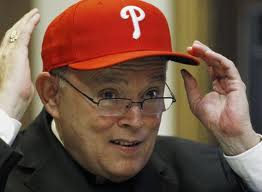
Chaput

Roman Catholics have long quoted Cardinal Newman and his view of the errancy of Protestant history.  But Newman lived in a different age, an age where truth was a commodity whose usefulness was not universal.  And the pendulum of history has now swung back to where the certainty of history has been shown to be well, more Protestant.  And so it was with some great interest that I noted the estimable Archbishop of Philadelphia has written a piece in the May issue of First Things making the case for civic involvement.[i]    But he does so on an entirely Protestant foundation!  It’s almost as if Chaput either doesn’t know American history or he hopes his readers don’t. (In fact, I’ve written about Archbishop Chaput’s mistreatment of history in a previous post, The Death of Roman Catholic Tradition.)

Chaput begins, “As a nation, the United States is built on a religious anthropology.  It presumes a moral architecture shaped deeply by biblical thought and belief.”  Well that is certainly true as far as it goes.  But what he leaves unsaid is that that “anthropology” was exclusive of his denomination.  In other words to appeal to the “architecture” of the American founding is necessarily to exclude Roman Catholicism and appeal to a tradition that worked against his denomination.  (It must be admitted that the Catholics from Spain actually arrived on the North American continent before the European Protestants.  But as I show in the previous post – and what the archbishop continues in his recent offering – is his focus only on the Protestant Founders citing many of them by name.  When he refers to “the Founders” he obviously means the Protestants of New England.)

The Archbishop continues:

What we believe – or don’t’ believe – about God profoundly shapes what we believe about the nature of the human person and the purpose of human society.

So what did the Founders believe about God and the nature of the human person?   And does that bear any resemblance to what Chaput’s denomination holds?

If the average American citizen were asked, who was the founder of America, the true author of our great Republic, he might be puzzled to answer. We can imagine his amazement at hearing the answer given to this question by the famous German historian, Ranke, one of the profoundest scholars of modem times.  Says Ranke, `John Calvin was the virtual founder of America’.[ii] (emphasis added)

In fact, so profound was Calvin’s influence on the Founders that fully “80 percent of American Christians in the colonial period… were significantly influenced by John Calvin’s teachings.”[iii]  That number is simply astounding!  But it explains why 77% of the universities in America at the time of the adoption of the Constitution were “based on Calvinistic principles.”  So we may rightly assume that Founders’ idea of God, “the nature of the human person and the purpose of human society” were Calvinistic and antithetical to Roman Catholicism.

How so, you might ask?

The chief characteristic of the Calvinistic churches was their belief in the sovereignty of God.  And because God’s will guides and directs all of His creation there was no need of a “Magisterium” to do God’s work.  (This incidentally, is the foundation of Calvin’s doctrine of predestination which the Roman Catholic Church declared anathema at the Council of Trent.)  So the early Christian churches had no hierarchy. (And Christian churches today maintain that tradition!)

The Calvinist churches in early America divided labor between pastors, elders and deacons with presbyteries over geographical areas; but none was superior to the others.  This is precisely the arrangement that was built into the American government – a President, Senate and House of Representatives with a judiciary over geographical areas.  All performed their own function but none was superior to the others.  That structure, by the way, was specifically condemned by Pope Leo XII in 1895, more than one hundred years after the adoption of the U.S. Constitution![iv]    You see to the Pope at Rome, the proper form of government was to give to Rome the “favor of the laws and the patronage of the public authority.”  In other words, the state should bow to the Pope.

(Apparently Archbishop Chaput is not even aware of his own sect’s history when he makes this further faux pas: “For Catholics, the civil order has its own sphere of responsibility and its own autonomy apart from the Church.”)

The lack of ecclesiastical hierarchy was based on the Calvinistic principle of the priesthood of all believers.  That is to say, that all of God’s children take part in the work of His kingdom equally.   The impact that this had on early America was that everyone – from a very early age – had to read and understand the Bible.  After all, how could one exercise his priestly office without knowledge?  And that had the further effect of causing Calvinists to build universities wherever they went.  God required that all of His people be educated in order to better serve him.  The Roman Catholic Church as is shown by Archbishop Chaput’s title is the antithesis of this.   Rome has always selected just a few to be “priests”.  And those priest act as an “alter Christus” which was anathema to America’s Founders.

The fact that Roman Catholicism was so far outside the purview of early American Christianity is made clear by Dr. Mark Noll’s description of the country nearly seventy years after the Founders had completed their work:

They (Protestant Christians of British descent) regarded Roman Catholicism not as an alternative Christian religion but as the world’s most perverse threat to genuine faith.  To most American Protestants, Catholicism seemed as alien to treasured political values as it was antithetical to true Christianity.[v]

How a modern Roman Catholic prelate can opine about a “religious anthropology” that would have excluded his denomination as though it hadn’t is really quite perplexing.

The Archbishop continues:

Our history as a nation is steeped in religious imagery, convictions, and language.  The idea that we can pull those religious roots out of our political life without hurting our identity as a nation is both imprudent and dangerous.

But it is equally dangerous to graft Catholic doctrine onto “those religious roots” where they never existed to begin with especially when the Catholic ideals were nowhere to be found in our “identity”.

Four paragraphs before the end apparently the Archbishop had a twinge of conscience:

It’s worth recalling that the roots of the American experience are deeply Protestant, and that these roots go back a very long way, to well before the nation’s founding.  Catholics have little reason to remember the Puritans fondly.

And apparently Catholics have little reason to remember any other of America’s founding groups either.

In the end, I suppose a couple of questions weigh on me:

  1. Is it legitimate for a Roman Catholic Archbishop to lay claim to ideas and principles that his denomination has rejected?  And then to use same as a basis for a call to action?
  2. Should we allow the Archbishop to so cavalierly dismiss his own church’s history while at the same time appropriating Protestant history as though it were his own?
  3. Can we as American Christians allow such God honoring doctrines as His Sovereignty and man’s depravity to be commingled with an institution that has historically stood against them?
  4. Is it prudent or even “American” to support this man when the goal of his denomination, as stated by the Pope at Rome, is to subject the state to the church?

If we are going to heed the Archbishop’s call to action we must surely get our history right first.  Or insist that he does.


[i] Chaput, Charles J. (2014, May 1) “We Can’t Be Silent”.  First Things.

[ii] Eidsmoe, John, “Christianity and the Constitution: The Faith of Our Founding Fathers” (Grand Rapids: Baker Books. Kindle book loc. 68-70

[iii] Holmes, David L.  “The Faiths of the Founding Fathers” (New York: Oxford University Press. 2006)  Kindle book loc. 225-227

[iv] http://www.vatican.va/holy_father/leo_xiii/encyclicals/documents/hf_l-xiii_enc_06011895_longinqua_en.html   Specifically, Leo said: “it would be very erroneous to draw the conclusion that in America is to be sought the type of the most desirable status of the Church, or that it would be universally lawful or expedient for State and Church to be, as in America, dissevered and divorced… but she would bring forth more abundant fruits if, in addition to liberty, she enjoyed the favor of the laws and the patronage of the public authority.”  In other words the state should bow to Rome.

[v] Noll, Mark A.  “The Civil War as a Theological Crisis.”  (Chapel Hill: The University of North Carolina Press.  2006.  P. 18)

Pope Authorizes Reading the Qu’ran at the Vatican

07 Saturday Jun 2014

Posted by Paul Bassett in Islam, Roman Catholicism, Unity

≈ Leave a comment

Tags

Islam, Vatican

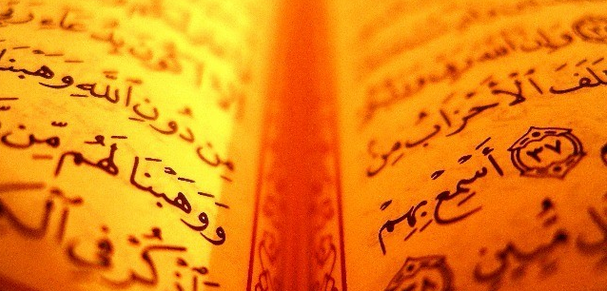
Screen-Shot-2014-06-06-at-4.23.10-PM


Well, that’s not something you see everyday.

http://bit.ly/1ibz9Ic

I wonder if the Pope will let them read Surah 9:29?:

Fight those who do not believe in Allah or in the Last Day and who do not consider unlawful what Allah and His Messenger have made unlawful and who do not adopt the religion of truth from those who were given the Scripture – [fight] until they give the jizyah willingly while they are humbled.

Or maybe Pope Francis will approve of this Qu’ranic jewel:

Indeed, they who disbelieved among the People of the Scripture (i.e. Christians and Jews) and the polytheists will be in the fire of Hell, abiding eternally therein. Those are the worst of creatures. (emphasis added)

I don’t know, maybe the Vatican is seeking support for its traditional suppression of women.  Perhaps the Imam might share this with His Holiness:

Men are in charge of women by [right of] what Allah has given one over the other and what they spend [for maintenance] from their wealth. So righteous women are devoutly obedient, guarding in [the husband’s] absence what Allah would have them guard. But those [wives] from whom you fear arrogance – [first] advise them; [then if they persist], forsake them in bed; and [finally], strike them. But if they obey you [once more], seek no means against them. Indeed, Allah is ever Exalted and Grand. (emphasis added)

It’s always interesting to see the contest between the two “One True Church” – es.

I wonder if the Bible is being read at Mecca this Sunday.    Naaaa.


Blessings,


Are Protestants more Roman Catholic than Catholics?

13 Tuesday May 2014

Posted by Paul Bassett in Abortion, C2C IP, Darryl Hart

≈ Leave a comment

Tags

abortion, Catholic church, Catholics, Patricia Miller, Rome

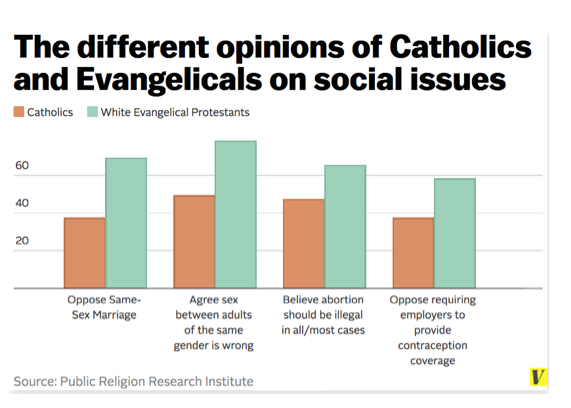
Catholic opinion survey vs Evangelical Protestants

Darryl Hart has picked up on an interesting work by Patricia Miller, here.  He notes how Catholics are leaving Rome for “another” Catholic church and how this exodus is being fueled by the great divide between Rome and (at least some of) her adherents.


The Catholic-Evangelical (Non-)Coalition | Religion Dispatches.

This is what happens when islamic superstition becomes sharia law

11 Sunday May 2014

Posted by Paul Bassett in Uncategorized

≈ Leave a comment

Pray for Christians in heathen lands…..

Therefore, Go Ye Into All the World and Tell Them About Yourselves….

06 Tuesday May 2014

Posted by Paul Bassett in C2C IP, Hermeneutics, Papacy, Reformation, Roman Catholicism

≈ Leave a comment

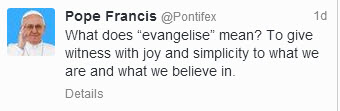
One of the complaints I have about the Roman Catholic Church in which I grew up is how “man-centered” its teachings are.  After all, the sacerdotal system is all about “you” going to Mass; “you” going to confession; “you” blindly following the Magisterium.   So it was with some little surprise that I saw this tweet today from Pope Francis:

 PontifexMe

 Yep.  Evangelization to Roman Catholics is apparently all about “you”, too.

Don’t be fooled, friends.  Evangelization is about giving witness to Jesus Christ.

Then Jesus came to them and said, “All authority in heaven and on earth has been given to me. 19 Therefore go and make disciples of all nations, baptizing them in the name of the Father and of the Son and of the Holy Spirit, 20 and teaching them to obey everything I have commanded you. (Emphasis added; Matthew 28:18-20)

Soli Deo Gloria.

THE BONDAGE OF RELIGIOUS DECEPTION

02 Friday May 2014

Posted by Paul Bassett in Roman Catholicism

≈ 6 Comments

Mike Gendron has posted an excellent piece which I am recreating here.  There is a link to his blog below.

================================================

Many former Catholics have looked back on their experience of participating in the weekly Sacrifice of the Mass as a “prison sentence.” It was something they were forced to attend to avoid the penalty of a mortal sin. Others remember it as a mindless ritual of standing, sitting, kneeling and reciting responses as the priest performed his religious duties. All Catholics are obligated by the laws of their church to attend church every week: “On Sundays and other holy days of obligation the faithful are bound to participate in the Mass” (Catechism of the Catholic Church [CCC], para. 2180). With this law so explicit and demanding, the question begs an answer: Why is participation so compulsory for Catholics? The answers are complex and controversial.

According to the Catechism, “The Mass is…the sacrificial memorial in which the sacrifice of the cross is perpetuated” (CCC para. 1382). “The Eucharist is thus a sacrifice because it re-presents the sacrifice of the cross….the sacrifice of Christ and the sacrifice of the Eucharist are one single sacrifice: The victim is one and the same. In this divine sacrifice…the same Christ who offered himself once in a bloody manner on the altar of the cross is contained and is offered in an unbloody manner” (CCC para. 1366,1367). Catholics express their faith in the real presence of Jesus by genuflecting as a sign of adoration of the Lord.

Catholics are given no choice but to believe these oppressive dogmas. The Lord Jesus Christ cannot be physically present in the Eucharist on altars all over the world at the same time. Yet Catholics are between a rock and a hard place. If they deny the presence of Jesus, they are condemned by their church. “If anyone denies, that in the sacrament of the most Holy Eucharist, are contained truly, really and substantially the body and blood together with the soul and divinity of our Lord Jesus Christ, and consequently the whole Christ…let him be anathema” (Canon 1, Council of Trent). On the other hand, if they worship the Eucharist as the Lord Jesus, they commit the most serious sin of idolatry, similar to the sin of the Israelites, who worshiped a golden calf as the true God who delivered them out of Egypt. God’s wrath burned hot against this sin and 3000 were put to death (Exodus 32:1-28).
 
Catholics are taught their redemption comes not from the perfect and finished sacrifice of Jesus on Calvary’s cross, but through the repetitious sacrifices on altars. “Every time this mystery is celebrated, the work of our redemption is carried on” (CCC, para. 1068, 1405).  This blatantly denies the testimony of Scripture. Jesus “entered the holy place once for all, having obtained eternal redemption” (Heb. 9:12).
 
The sacrifice of the Mass clearly violates God’s Word and is a powerful deception that holds Catholics in bondage. Catholics should heed Paul’s sermon in Acts 17:23-30, “The God who is Lord of heaven and earth, does not dwell in tabernacles made with hands; neither is He offered with human hands…the Divine Nature is not like gold, or silver or stone.” In other words, the Divine Nature is not like flour and water, or an image formed by the thoughts of man. Furthermore, Jesus Christ cannot be offered by the hands of sinful priests. Jesus Christ, the perfect High Priest, offered Himself, the perfect sacrifice, once, to a perfect God who demands perfection. Then He cried out in victory, “It is finished!” There are no more offerings for sin (Hebrews 10:18). In light of all of this, we must call our Catholic friends and loved ones to repentance and faith in the true Christ who secured eternal redemption for His people.


Welcome to Proclaiming the Gospel » PTG Blog.

225 Years Ago Today…

30 Wednesday Apr 2014

Posted by Paul Bassett in America's Christian Heritage, Christianity, Founding Fathers, Freedom, Religious Freedom, U S Constitution

≈ Leave a comment

Tags

God, Inaugural Address, Washington

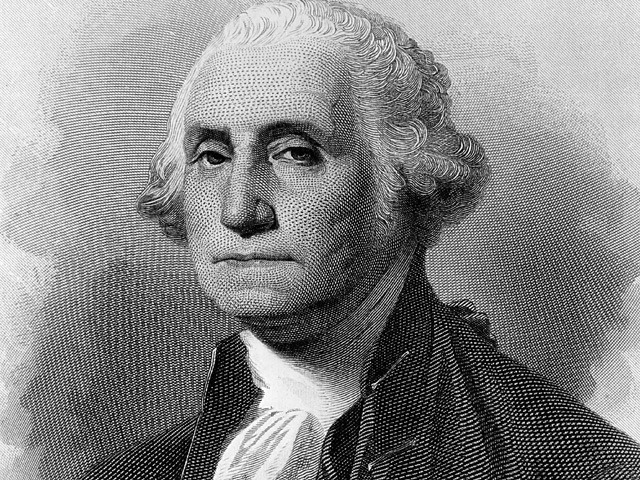
George Washington

Today marks the 225th anniversary of our first president’s first inaugural.  And it therefore seems fitting to remark on the text of his inaugural address and the priorities with which he set about as our first federal head:


Such being the impressions under which I have, in obedience to the public summons, repaired to the present station; it would be peculiarly improper to omit in this first official Act, my fervent supplications to that Almighty Being who rules over the Universe, who presides in the Councils of Nations, and whose providential aids can supply every human defect, that his benediction may consecrate to the liberties and happiness of the People of the United States, a Government instituted by themselves for these essential purposes: and may enable every instrument employed in its administration to execute with success, the functions allotted to his charge. In tendering this homage to the Great Author of every public and private good I assure myself that it expresses your sentiments not less than my own; nor those of my fellow-citizens at large, less than either. No People can be bound to acknowledge and adore the invisible hand, which conducts the Affairs of men more than the People of the United States. Every step, by which they have advanced to the character of an independent nation, seems to have been distinguished by some token of providential agency. And in the important revolution just accomplished in the system of their United Government, the tranquil deliberations and voluntary consent of so many distinct communities, from which the event has resulted, cannot be compared with the means by which most Governments have been established, without some return of pious gratitude along with an humble anticipation of the future blessings which the past seem to presage. These reflections, arising out of the present crisis, have forced themselves too strongly on my mind to be suppressed. You will join with me I trust in thinking, that there are none under the influence of which, the proceedings of a new and free Government can more auspiciously commence.


Washington began his term with what is essentially a prayer.  His “fervent supplicatons to that Almighty Being who rules over the Universe…” were bold and necessary, in his view, to ensure the “liberties and happiness of the People of the United States….”  Further, Washington was not renegade in his pronouncements.  He was merely confirming the general sentiment of those people who had elected him to govern.

And he ended his address with yeat another prayer.  A prayer that God and His blessing be “conspicuous” in the actions of the new government:

…I shall take my present leave; but not without resorting once more to the benign parent of the human race, in humble supplication that since he has been pleased to favour the American people, with opportunities for deliberating in perfect tranquility, and dispositions for deciding with unparellelled unanimity on a form of Government, for the security of their Union, and the advancement of their happiness; so his divine blessing may be equally conspicuous in the enlarged views, the temperate consultations, and the wise measures on which the success of this Government must depend.

Washington began his address by acknowledging God in the establishment of this country and closed his speech with another “supplication” that He be readily apparent in the workings of this new government.

The success that our country experienced after its founding can surely be seen as an answer to Washington’s – and the peoples’ prayers.  And at a distance of 225 years, we would do well to emulate our first President.

“Peterborough: Islamic Rape-Wave Continues in Great Britain”

03 Thursday Apr 2014

Posted by Paul Bassett in Acts 17, David Wood, Islam, Jihad

≈ Leave a comment

Tags

Child rape, Islam, Jihad

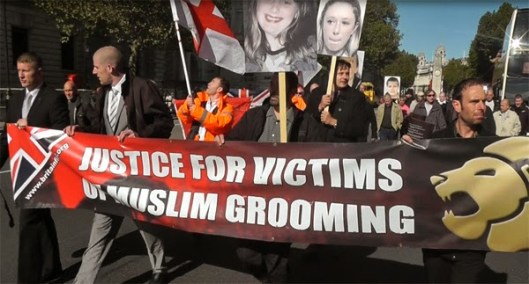
This is truly one of the more disturbing stories I’ve seen in a while and kudos to David Wood for shining a light on it.  Apparently Islamic gangs seek out young British girls, ply them with drugs and them rape them.  It’s almost too much to write…..

Please make yourself aware of this and share it with your followers.

Attribtution:  the title of this post and the image used therein were taken from David’s blog which can be found here:  http://www.answeringmuslims.com/2014/04/peterborough-islamic-rape-wave.html

Is Roger Olson a Marcionite? Part 2

30 Sunday Mar 2014

Posted by Paul Bassett in Uncategorized

≈ Leave a comment

Tags

Arminianism, Predestination, Roger Olson

A while ago, I asked the question, “Is Roger Olson a Marcionite”? I did so with no malice but the question was genuine in light of Dr. Olson’s pronouncements about the impossibility of Calvinism. Dr. Olson believes that the Calvinist doctrine of double predestination is untrue because it requires, in his estimation a God who is not “good”. Interestingly enough, Dr. Olson has continued his pitch here:

Must a truly good person give everyone under his or her influence an equal opportunity to flourish and succeed, to avoid disaster and failure? No. Such a good person must only give every person under his influence sufficient opportunity to avoid disaster and failure. That the “Arminian God” has done.

But I renew my earlier question. Does not this definition of “good” require the ignorance of the Old Testament?

I received a providential reminder of this today as I was meandering through one of the Bible apps on one of my mobile devices. (Life seems sometimes needlessly complicated, doesn’t it?) At any rate, when I clicked on “Start a Reading Plan” one category of plans took me immediately to 1 Samuel 15. And I was immediately struck how Dr. Olson’s definition of good could not in anyway apply to God in this story, the work of the prophet Samuel or the message of the text!

1 Samuel 15 is the story of God’s command to Saul, through Samuel to “attack the Amalekites and totally destroy all that belongs to them. Do not spare them; put to death men and women, children and infants, cattle and sheep, camels and donkeys.” And Saul nearly accomplished his appointed task. Save for the Amalekite king and a few sheep and cows, all were destroyed – including “children and infants”.

Is Dr. Olson prepared to say that God was not good for His command?

The story continues with God’s displeasure that Saul did not complete his task as ordered. God was so incensed with Saul that He removed him as king of the Israelites and sent Samuel to personally kill Agag, the king of the Amalekites. What’s I find interesting from Dr. Olson’s perspective is that neither the “children and infants” nor King Agag was given a “sufficient opportunity to avoid disaster and failure”.

And Dr. Olson continues his clarification here:

Still, the point is that, according to Romans 1 and classical Arminian theology, God has given everyone sufficient opportunity to be saved. He has not closed the door in anyone’s face without them pulling it closed from their side.

So what is the point of 1 Samuel 15? Did not God “close the door” in the face of the infants? Women?

One of the main problems with the Arminian position is that it presupposes that man can have a comprehensive knowledge of God. But as Calvin rightly quotes from Scripture, “It is the glory of God to conceal a thing.” (Proverbs 25:2) By not recognizing that God has revealed His goodness while hiding its appearance in some circumstances is to deny Scripture. Scripture is very consistent that God is good (Psalm 100:5; 136:1) whether we understand it or not (Isaiah 55:8-9). And what is God’s meaning in Job if it’s not that we are not able to understand the totality of God’s goodness:

Surely I spoke of things I did not understand,
things too wonderful for me to know. (Job 42:3)

At the end of it all, we can only know what God has revealed to us – and that He is eternally good. He has also revealed to us that His decrees are effective and accomplish His will (Isaiah 46:10). And lastly He has revealed that evil exists. To go beyond that and to ascribe some definition of “good” that makes sense of the means and ends of God is sinfulness.

And nobody has put the matter more eloquently that John Calvin, himself:

Therefore, in order to keep the legitimate course in this matter, we must return to the word of God, in which we are furnished with the right rule of understanding. For Scripture is the school of the Holy Spirit, in which as nothing useful and necessary to be known has been omitted, so nothing is taught but what it is of importance to know. Every thing, therefore delivered in Scripture on the subject of predestination, we must beware of keeping from the faithful, lest we seem either maliciously to deprive them of the blessing of God, or to accuse and scoff at the Spirit, as having divulged what ought on any account to be suppressed. Let us, I say, allow the Christian to unlock his mind and ears to all the words of God which are addressed to him, provided he do it with this moderation—viz. that whenever the Lord shuts his sacred mouth, he also desists from inquiry. The best rule of sobriety is, not only in learning to follow wherever God leads, but also when he makes an end of teaching, to cease also from wishing to be wise. The danger which they dread is not so great that we ought on account of it to turn away our minds from the oracles of God. There is a celebrated saying of Solomon, “It is the glory of God to conceal a thing,” (Prov. 25:2). But since both piety and common sense dictate that this is not to be understood of every thing, we must look for a distinction, lest under the pretence of modesty and sobriety we be satisfied with a brutish ignorance. This is clearly expressed by Moses in a few words, “The secret things belong unto the Lord our God: but those things which are revealed belong unto us, and to our children for ever,” (Deut. 29:29). We see how he exhorts the people to study the doctrine of the law in accordance with a heavenly decree, because God has been pleased to promulgate it, while he at the same time confines them within these boundaries, for the simple reason that it is not lawful for men to pry into the secret things of God. (Institutes III:21:3).

By ignoring the clear admonition of the Old Testament it appears to me that Arminians in general and Dr. Olson in particular are vulnerable to the charge of Marcionism.

If I’ve missed something or worse, if I’ve misstated something, I would love to hear about it.

Blessings,


← Older posts
Newer posts →

Goodreads

Recent Posts

  • A General Theory about the 2020 Election Fraud July 9, 2021
  • Why the Roman Catholic Church MUST canonize Donald Trump June 16, 2018
  • What Everyone Needs to Know about the Paris Climate Accords June 14, 2017
  • Greg Bahnsen – an homage December 11, 2015
  • Pittsburgh, PA Mayor Peduto: Bring us Syrian Muslims! November 11, 2015

Archives

  • July 2021
  • June 2018
  • June 2017
  • December 2015
  • November 2015
  • October 2015
  • September 2015
  • August 2015
  • July 2015
  • June 2015
  • May 2015
  • March 2015
  • September 2014
  • July 2014
  • June 2014
  • May 2014
  • April 2014
  • March 2014
  • February 2014
  • December 2013
  • October 2013
  • July 2013
  • June 2013
  • May 2013
  • April 2013
  • March 2013
  • February 2013
  • January 2013
  • December 2012

Categories

  • Abortion
  • Acts 17
  • America's Christian Heritage
  • Andrew McCarthy
  • Apologetics
  • Armnianism
  • Authority
  • Bryan Cross
  • C2C IP
  • Caste system
  • Catholicism
  • Charles Chaput
  • Christianity
  • Climate Change
  • Darryl Hart
  • David Wood
  • Edgardo Mortara
  • Elections
  • Eucharist
  • Founding Fathers
  • Freedom
  • Garry Wills
  • George Weigel
  • Greg Bahnsen
  • Hermeneutics
  • Islam
  • Jihad
  • Kidnapping
  • Matthew 16
  • Movie Reviews
  • Papacy
  • Paris Climate Accords
  • Pat Buchanan
  • Quran
  • Raymond Brown
  • Reformation
  • Religious Freedom
  • Roger Olson
  • Roman Catholicism
  • SCOTUS
  • Trent
  • U S Constitution
  • Uncategorized
  • Unity
  • William Donohue

Meta

  • Create account
  • Log in
  • Entries feed
  • Comments feed
  • WordPress.com

Blogs I Follow

  • anactofmind
  • Roger E. Olson
  • The Gospel Coalition
  • The Heidelblog
  • The Jagged Word
  • "In verbo veritatis" (2 Cor 6:7)
  • Old Life
  • Glass House
  • My Blog
  • Return to Rome
  • Mark D. Roberts
  • Called to Communion
  • Larry Hurtado's Blog
  • Societas Christiana (2.0)
  • John Calvin Quotes
  • The Lonely Pilgrim
  • Reformation500
  • Viewpoint
  • Beggars All: Reformation And Apologetics
  • WordPress.com News

Create a free website or blog at WordPress.com.

anactofmind

If there is anything in the world that can really be called a man's property, it is surely that which is the result of his mental activity. - Arthur Schopenhauer

Roger E. Olson

If there is anything in the world that can really be called a man's property, it is surely that which is the result of his mental activity. - Arthur Schopenhauer

The Gospel Coalition

If there is anything in the world that can really be called a man's property, it is surely that which is the result of his mental activity. - Arthur Schopenhauer

The Heidelblog

Recovering the Reformed Confession

The Jagged Word

Where the sacred & profane collide

"In verbo veritatis" (2 Cor 6:7)

Thoughts and writings of Fr. Joseph A. Komonchak

Old Life

If there is anything in the world that can really be called a man's property, it is surely that which is the result of his mental activity. - Arthur Schopenhauer

Glass House

My lies will get better

My Blog

If there is anything in the world that can really be called a man's property, it is surely that which is the result of his mental activity. - Arthur Schopenhauer

Return to Rome

If there is anything in the world that can really be called a man's property, it is surely that which is the result of his mental activity. - Arthur Schopenhauer

Mark D. Roberts

If there is anything in the world that can really be called a man's property, it is surely that which is the result of his mental activity. - Arthur Schopenhauer

Called to Communion

Reformation meets Rome

Larry Hurtado's Blog

Comments on the New Testament and Early Christianity (and related matters)

Societas Christiana (2.0)

If there is anything in the world that can really be called a man's property, it is surely that which is the result of his mental activity. - Arthur Schopenhauer

John Calvin Quotes

The Lonely Pilgrim

A Christian's Road Home to Rome and Journey Onward

Reformation500

Viewpoint

If there is anything in the world that can really be called a man's property, it is surely that which is the result of his mental activity. - Arthur Schopenhauer

Beggars All: Reformation And Apologetics

If there is anything in the world that can really be called a man's property, it is surely that which is the result of his mental activity. - Arthur Schopenhauer

WordPress.com News

The latest news on WordPress.com and the WordPress community.

Privacy & Cookies: This site uses cookies. By continuing to use this website, you agree to their use.
To find out more, including how to control cookies, see here: Cookie Policy
  • Subscribe Subscribed
    • anactofmind
    • Already have a WordPress.com account? Log in now.
    • anactofmind
    • Subscribe Subscribed
    • Sign up
    • Log in
    • Report this content
    • View site in Reader
    • Manage subscriptions
    • Collapse this bar
 

Loading Comments...