Is Roger Olson a Marcionite? Part 2

Tags

, ,

A while ago, I asked the question, “Is Roger Olson a Marcionite”? I did so with no malice but the question was genuine in light of Dr. Olson’s pronouncements about the impossibility of Calvinism. Dr. Olson believes that the Calvinist doctrine of double predestination is untrue because it requires, in his estimation a God who is not “good”. Interestingly enough, Dr. Olson has continued his pitch here:

Must a truly good person give everyone under his or her influence an equal opportunity to flourish and succeed, to avoid disaster and failure? No. Such a good person must only give every person under his influence sufficient opportunity to avoid disaster and failure. That the “Arminian God” has done.

But I renew my earlier question. Does not this definition of “good” require the ignorance of the Old Testament?

I received a providential reminder of this today as I was meandering through one of the Bible apps on one of my mobile devices. (Life seems sometimes needlessly complicated, doesn’t it?) At any rate, when I clicked on “Start a Reading Plan” one category of plans took me immediately to 1 Samuel 15. And I was immediately struck how Dr. Olson’s definition of good could not in anyway apply to God in this story, the work of the prophet Samuel or the message of the text!

1 Samuel 15 is the story of God’s command to Saul, through Samuel to “attack the Amalekites and totally destroy all that belongs to them. Do not spare them; put to death men and women, children and infants, cattle and sheep, camels and donkeys.” And Saul nearly accomplished his appointed task. Save for the Amalekite king and a few sheep and cows, all were destroyed – including “children and infants”.

Is Dr. Olson prepared to say that God was not good for His command?

The story continues with God’s displeasure that Saul did not complete his task as ordered. God was so incensed with Saul that He removed him as king of the Israelites and sent Samuel to personally kill Agag, the king of the Amalekites. What’s I find interesting from Dr. Olson’s perspective is that neither the “children and infants” nor King Agag was given a “sufficient opportunity to avoid disaster and failure”.

And Dr. Olson continues his clarification here:

Still, the point is that, according to Romans 1 and classical Arminian theology, God has given everyone sufficient opportunity to be saved. He has not closed the door in anyone’s face without them pulling it closed from their side.

So what is the point of 1 Samuel 15? Did not God “close the door” in the face of the infants? Women?

One of the main problems with the Arminian position is that it presupposes that man can have a comprehensive knowledge of God. But as Calvin rightly quotes from Scripture, “It is the glory of God to conceal a thing.” (Proverbs 25:2) By not recognizing that God has revealed His goodness while hiding its appearance in some circumstances is to deny Scripture. Scripture is very consistent that God is good (Psalm 100:5; 136:1) whether we understand it or not (Isaiah 55:8-9). And what is God’s meaning in Job if it’s not that we are not able to understand the totality of God’s goodness:

Surely I spoke of things I did not understand,
things too wonderful for me to know. (Job 42:3)

At the end of it all, we can only know what God has revealed to us – and that He is eternally good. He has also revealed to us that His decrees are effective and accomplish His will (Isaiah 46:10). And lastly He has revealed that evil exists. To go beyond that and to ascribe some definition of “good” that makes sense of the means and ends of God is sinfulness.

And nobody has put the matter more eloquently that John Calvin, himself:

Therefore, in order to keep the legitimate course in this matter, we must return to the word of God, in which we are furnished with the right rule of understanding. For Scripture is the school of the Holy Spirit, in which as nothing useful and necessary to be known has been omitted, so nothing is taught but what it is of importance to know. Every thing, therefore delivered in Scripture on the subject of predestination, we must beware of keeping from the faithful, lest we seem either maliciously to deprive them of the blessing of God, or to accuse and scoff at the Spirit, as having divulged what ought on any account to be suppressed. Let us, I say, allow the Christian to unlock his mind and ears to all the words of God which are addressed to him, provided he do it with this moderation—viz. that whenever the Lord shuts his sacred mouth, he also desists from inquiry. The best rule of sobriety is, not only in learning to follow wherever God leads, but also when he makes an end of teaching, to cease also from wishing to be wise. The danger which they dread is not so great that we ought on account of it to turn away our minds from the oracles of God. There is a celebrated saying of Solomon, “It is the glory of God to conceal a thing,” (Prov. 25:2). But since both piety and common sense dictate that this is not to be understood of every thing, we must look for a distinction, lest under the pretence of modesty and sobriety we be satisfied with a brutish ignorance. This is clearly expressed by Moses in a few words, “The secret things belong unto the Lord our God: but those things which are revealed belong unto us, and to our children for ever,” (Deut. 29:29). We see how he exhorts the people to study the doctrine of the law in accordance with a heavenly decree, because God has been pleased to promulgate it, while he at the same time confines them within these boundaries, for the simple reason that it is not lawful for men to pry into the secret things of God. (Institutes III:21:3).

By ignoring the clear admonition of the Old Testament it appears to me that Arminians in general and Dr. Olson in particular are vulnerable to the charge of Marcionism.

If I’ve missed something or worse, if I’ve misstated something, I would love to hear about it.

Blessings,


Is Roger Olson a Marcionite?

Tags

, ,

It may be recalled that Marcion was that early 2nd century fellow who applied an external concept of “good” to the God of the Bible and found Him wanting. In fact, Marcion’s concept of goodness led to him to completely reject the God of the Old Testament and the God of most of the New. God just didn’t measure up.

And so it was with great interest that I found Dr. Roger Olson’s latest post entitled, Why (High) Calvinism is Impossible. Now it’s no secret that Dr. Olson is no fan of Calvinism but what impresses me is his method of attacking Calvinism in general, and double predestination in particular. Because PD is pointed to in several places in the Scriptures, Dr. Olson has to develop his own hermeneutic:

Analysis of the Bible “presupposes belief that God is trustworthy, that God cannot deceive. But this assumes that God has a stable, enduring, eternal character that is “good” in a way analogous to our highest and best intuitions of “goodness”—whatever their source may be.”

That is simply striking to me. Why must God be analogous to man in any way? Now we know that man is analogous to God, that is we are created in His image and likeness, but I’m not sure that analogy is a two way street. And it certainly isn’t if we are to make God subject to our “highest and best intuitions”. And can God deceive? The Apostle Paul certainly believed so:

So God will send great deception upon them, and they will believe all these lies. 12 Then they will be condemned for not believing the truth and for enjoying the evil they do. (2 Thessalonians 2:11-12)

Not only can God deceive, but He plans to do exactly that, according to Paul! Even Marcion would have known that.

Then Dr. Olson expands his conception of “good” so that it becomes the standard by which we can determine God’s trustworthiness:

Put another way, negatively, if one believes that God’s goodness is nothing like our best intuitions of goodness, that God’s goodness is possibly compatible with anything capable of being put into words (i.e., ultimately and finally mysterious), then there is no good reason to trust him. Trust in a person, even God, necessarily requires belief that the person is good and belief that the person is good necessarily requires some content and not “good” as a cipher for something totally beyond comprehension and unlike anything else we call “good.”

Here we see Marcion writ large. For God has surely told us that His goodness is, in fact, “nothing like our best intuitions of goodness”. Consider Isaiah 55:8-9:

For my thoughts are not your thoughts, neither are your ways my ways, saith the Lord. 9For as the heavens are higher than the earth, so are my ways higher than your ways, and my thoughts than your thoughts.

How could Dr. Olson not know that? The plain fact is that God’s goodness is part of His nature. Therefore, it is not negotiable or subject to human scrutiny. As the Psalmist writes, “Give thanks to the Lord, for He is good!” (Psalm 136:1)

But all of the evidence I’ve presented is from the Old Testament. If Dr. Olson is not aware or has chosen to disregard the OT, is he a Marcionite?

Dialogue Continued – Dean Obeidallah and the 1797 Treaty with Tripoli

Tags

, , ,

I continue to be grateful to Dean Obeidallah for his persistence in the matter of America’s Christian heritage.  His latest objection is common and has to do with the 1797 Treaty between the new American federation and the Muslim nations of North Africa which were pirating U.S. merchant ships.

Image

Here is the text which Dean thinks is problematic, from Article XI of said treaty:

As the government of the United States of America is not in any sense founded on the Christian Religion,-as it has in itself no character of enmity against the laws, religion or tranquility of Musselmen,-and as the said States never have entered into any war or act of hostility against any Mehomitan nation, it is declared by the parties that no pretext arising from religious opinions shall ever produce an interruption of the harmony existing between the two countries.

So a plain reading of this text might be understood to buttress Dean’s case but a closer look would seem otherwise.  To wit,

  1. The text of the article is correct – the “government of the United States of America” – that is the “Federal” government – was not founded on the Christian religion, as per the First Amendment to the Constitution.  But the Federal government is only a container for the participating states which were decidedly Christian and this phrase does not mean that the social or political framework was not founded on Christian principles.
  2. The treaty was negotiated from weakness by the United States.  Without a large navy from which to despatch sufficient power to police the Straits of Gibraltar and western Mediterranean the Americans had little choice but to capitulate – in the short term.
  3. Article XI is absent any of the Arabic copies of the treaty.  So the copies of the treaties that were in the hands of the non-Christian parties to it did not have this section.  (It is fair to point out, as Dean’s side of the debate will, that the article was in the version ratified by the Senate.  True enough but that only serves to amplify the mystery.
  4. Article XI was negotiated out of the treaty after only 8 years.  The Americans decision fight the Muslims resulted in a stronger position vis-à-vis the original.  So the problem for Dean’s position here is that if America was indeed not a Christian nation in 1797 it must have become one by 1805 when this article was removed.  Not likely the country changed its core – and changed it back again – so whimsically.
  5. During this same time period, the Congress of the United States approved the printing of a “recommended Bible” (1781-82); in 1783, John Hancock declared a “religiously observed…Day of Thanksgiving and Prayer” for Massachusetts; and emigres to Maryland had to swear his “belief in the Christian religion” as required by statute. 

 In sum, the 1797 Treaty with the Barbary pirates seemingly contains language problematic to the assertion of America’s Christian underpinning.  But a closer reading of it in context and an understanding of the continuing Christian operations of the country as a whole requires a reading different than that a total dismissal of America’s Christian foundation.   And the continuing public expression of Christian devotion after the enactment of this treaty shows that America was then and remains a Christian nation.

Follow me on Twitter:  @Colossianstwo8

A Dialogue with Dean Obeidallah – U S Laws are based on the Bible!

ImageI am delighted that Dean Obeidallah has graciously responded to my tweets about his recent article.

Dean is concerned that the rise of Mike Hucakbee and Rick Santorum may lead to what he calls a “Christian Sharia”.  And given Dean’s misunderstandings of the Bible, I can certainly see his point.  After all, if you think Deuteronomy 22:20-21 is representative of true Christianity then his fear may well be justified.  But I think Dean has missed the point and I would like to set the record straight.  In his recent tweet to me he expressed concern that our laws should not be based on the Bible.

First of all, America’s laws are already based on the Bible.  Nine of the thirteen colonies that came together to form the United States had established Christian religions.[i] The Founding Fathers were Christians and were committed to creating a new system based on Christian principles.   And that trend predated the Constitutional Convention by at least 150 years.

In 1636 the General Court of Massachusetts resolved to make a code of laws “agreeable to the word of God.”[ii]

At the time of the Convention, Delaware require the following oath of all people “appointed to any office or trust” including representatives to the Constitutional Convention:

” I, A B. do profess faith in God the Father, and in Jesus Christ His only Son, and in the Holy Ghost, one God, blessed for evermore; and I do acknowledge the holy scriptures of the Old and New Testament to be given by divine inspiration.”[iii]

And Pennsylvania, likewise:

I do believe in one God, the Creator and governor of the universe, the rewarder of the good and the punisher of the wicked. And I do acknowledge the Scriptures of the Old and New Testament to be given by Divine inspiration. [iv]

And Massachusetts, likewise:

[All persons elected to State office or to the Legislature must] make and subscribe the following declaration, viz. “I, _____, do declare that I believe the Christian religion, and have firm persuasion of its truth.”[v]

And many more colonies had similar provisions but I hope the point has been made with these few.

So when the Founders came together in Philadelphia they were not acting contrary to the history of the colonies they there were there to represent.  In fact, the Christian foundation of the American culture was so established around the world that the famed German historian, Leopold von Ranke declared that John Calvin was the true founder of America! [vi]

Lastly, Dr. Eidsmoe documents how the Bible was the source most frequently cited by the Founders.  And that John Locke’s ideas of liberty and the “consent of the governed” are biblical concepts themselves:

The concept of “consent of the governed” has its roots in John Locke’s social compact, which is in turn rooted in the Calvinist concept of the covenant, by which men, in the presence of God, join themselves together into a body politic. And correctly understood, the concept is biblical.[vii]

In sum, when America’s Constitution – the “Supreme Law of the Land” – was contemplated and enacted it was done by professing Christians whose intent was to create a Christian nation.  The colonies that sent representatives to the Constitution had either established Christian religions supported by the taxpayer or had overwhelmingly Christian populations without an established church.  They only sent people to represent them at Philadelphia that could swear allegiance to a Trinitarian Christianity.

Were America’s laws based on the Bible?  How could they not be?

Thanks again, to Dean Obeidallah for this dialogue.

You can find Dean on Twitter here:  @Deanofcomedy

You can follow me here:  @Colossianstwo8


[i] Holmes, David L.  “The Faiths of the Founding Fathers”; Oxford University Press, 2006.  Kindle Location 191-192.  See also Eidsmoe, cited below, Kindle location 556-558

[ii] Eidsmoe, John.  “Christianity and the Constitution: The Faith of our Founding Fathers”;  Baker Academic, 1995.  Kindle Location 239-240

[v] Skillman, Thomas T., “The Constitutions of All the United States According to the Latest Amendments” as quoted in Barton, David, “The Myth of Separation”, 5th ed., Wallbuilders Press, 1992.  P. 24

[vi] Eidsmoe, John.  Ibid.  Kindle location 68-70.

[vii] Eidsmoe, ibid.  Kindle location 4090-4092.

A Dialogue with Dean Obeidallah – U S Laws are based on the Bible!

Tags

, , , , ,

Image

I am delighted that Dean Obeidallah has graciously responded to my tweets about his recent article.

Dean is concerned that the rise of Mike Hucakbee and Rick Santorum may lead to what he calls a “Christian Sharia”.  And given Dean’s misunderstandings of the Bible, I can certainly see his point.  After all, if you think Deuteronomy 22:20-21 is representative of true Christianity then his fear may well be justrified.  But I think Dean has missed the point and I would like to set the record straight.  In his recent tweet to me he expressed two concerns: that our laws should not be based on the Bible.

First of all, America’s laws are already based on the Bible.  Nine of the thirteen colonies that came together to form the United States had established Christain religions.[i] The Founding Fathers were Christians and were committed to creating a new system based on Christian principles.   And that trend predated the Constitutional Convention by at least 150 years.

In 1636 the General Court of Massachusetts resolved to make a code of laws “agreeable to the word of God.”[ii]

At the time of the Convention, Delaware require the following oath of all people “appointed to any office or trust” including representatives to the Constitutional Convention:

” I, A B. do profess faith in God the Father, and in Jesus Christ His only Son, and in the Holy Ghost, one God, blessed for evermore; and I do acknowledge the holy scriptures of the Old and New Testament to be given by divine inspiration.”[iii]

And Pennsylvania, likewise:

I do believe in one God, the Creator and governor of the universe, the rewarder of the good and the punisher of the wicked. And I do acknowledge the Scriptures of the Old and New Testament to be given by Divine inspiration. [iv]

And Massachusetts, likewise:

[All persons elected to State office or to the Legislature must] make and subscribe the following declaration, viz. “I, _____, do declare that I believe the Christian religion, and have firm persuasion of its truth.”[v]

And many more colonies had similar provisions but I hope the point has been made with these few.

So when the Founders came together in Philadelphia they were not acting contrary to the history of the colonies they there were there to represent.  In fact, the Christian foundation of the American culture was so established around the world that the famed German historian, Leopold von Ranke declared that John Calvin was the true founder of America! [vi]

Lastly, Dr. Eidsmoe documents how the Bible was the source most frequently cited by the Founders.  And that John Locke’s ideas of liberty and the “consent of the governed” are biblical concepts themselves:

The concept of “consent of the governed” has its roots in John Locke’s social compact, which is in turn rooted in the Calvinist concept of the covenant, by which men, in the presence of God, join themselves together into a body politic. And correctly understood, the concept is biblical.[vii]

In sum, when America’s Constitution – the “Supreme Law of the Land” – was contemplated and enacted it was done by professing Christians whose intent was to create a Christian nation.  The colonies that sent representatives to the Constitution had either established Christian religions supported by the taxpayer or had overwhelmingly Christian populations without an established church.  They only sent people to represent them at Philadelphia that could swear allegiance to a Trinitarian Christianity.

Were America’s laws based on the Bible?  How could they not be?

Thanks again, to Dean Obeidallah for this dialogue.

You can find Dean on Twitter here:  @Deanofcomedy


[i] Holmes, David L.  “The Faiths of the Founding Fathers”; Oxford University Press, 2006.  Kindle Location 191-192.  See also Eidsmoe, cited below, Kindle location 556-558

[ii] Eidsmoe, John.  “Christianity and the Constitution: The Faith of our Founding Fathers”;  Baker Academic, 1995.  Kindle Location 239-240

[v] Skillman, Thomas T., “The Constitutions of All the United States According to the Latest Amendments” as quoted in Barton, David, “The Myth of Separation”, 5th ed., Wallbuilders Press, 1992.  P. 24

[vi] Eidsmoe, John.  Ibid.  Kindle location 68-70.

[vii] Eidsmoe, ibid.  Kindle location 4090-4092.

Christian Sharia? A Call for Dean Obeidallah to Apologize

Tags

, , ,

Dean Obeidallah is worried that the Christian influence on American law and politics will be the next sharia. (“The Conservative Crusade for Sharia Law”.)  But he so badly misunderstands American history and the Bible that he should immediately publish a retraction.

The most obvious criticism of his piece is that was written in a Christian country whose legal system and institutions are based on Christianity.  Mr. Obeidallah penned his article in a country whose foundations were laid on Christian principles.  Who can forget the “laws of nature and of nature’s God” made so famous by the American Founders?  Or George Washington’s admonition that “Religion and morality are indispensable supports…(for)political prosperity.”  Was George Washington seeking to implement sharia?  Hardly.  And if these Christian principles have been with us for more than two centuries, how is it that Mr. Obeidallah is so free to publicly criticize them?  Shouldn’t he have his typing fingers cut off, or something?

And Mr. Obeidallah is quick to cite Thomas Jefferson’s 1802 letter to the Danbury Baptists which contains the badly misused phrase, “separation of church and state.”    This author thinks that Jefferson means what Obeidallah thinks he means – and that is that Church and State should be totally separate.  The irony in this is that Jefferson, who at the time was the President of the United States, concludes his letter with a prayer!  No kidding.  A sitting President offered a prayer to the God of the Bible on official U.S. stationery as part of his official capacity as President.  Separation?  Really?  That is perhaps why historians refer to Jefferson’s comment as erecting a “one way wall” to keep the government out of religion while allowing the Christian religion in to the government.

And in what I find to be a truly humorous part of Obeidallah’s article, he turns his inestimable genius to the Bible.  Citing Deuteronomy 22:20-21 Obeidallah thinks that the coming Christian sharia will result in the stoning of women.  But what Obeidallah fails to realize by his cherry-picking is that Deuteronomy Chapter 22 is the foundation for the modern women’s movement.  No kidding  – and he thinks its sharia!  To understand this chapter you must first realize the historical context and that is that women in every other society not under the influence of the Book of Deuteronomy treated women as property.  Yet, in the very chapter Mr. Obeidallah cited the woman in question has a right to a trial, to have evidence presented in her defense (Deut. 22:15-17) and a fair chance at acquittal! (vs. 18)   In fact, her accuser is just as likely to be punished if he fails to prove his case to the tribunal.  And while the wording of the Old Testament prohibitions is sometimes harsh – you will look in vain for cases where these sentences were carried out.  The severity of the potential punishment worked to remind the people that God is not only loving but also just.  Obeidallah is entirely anachronistic in his analysis.

But a more general and more weighty  critique of this article is that Obeidallah’s Christianity is backwards.  What that means is that he intends to judge Christians by the Old Testament Law (Deuteronomy is know as the book of the Law) but Christ Himself claimed to be the fulfillment of that law.  And the entire New Testament is instruction to Christians to flee from the law.

Lastly, the fact that ultimately shows the foolishness of Obeidallah’s article is that Christ Himself was presented with an opportunity to enforce Deuteronomy 22:20-22 in the famous story of the woman caught in adultery (John 8:1-11).  If that story shows anything it is that Christ calls his people to a new way – a way so radical as to forgive sinners and love one’s enemies.

That is true Christian sharia.

In sum, Mr. Obeidallah’s piece reflects a total ignorance of historical context and therefore presents a sleight against Christianity.  He should apologize – but I suspect that concept is as foreign to Mr. Obeidallah as is true Christianity.

Movie Review: Saving Mr. Banks

Tags

, ,

 Image

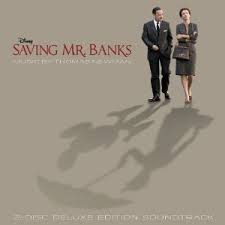
Telling a story about a storyteller is not an easy thing to do.  And telling a great story about a great storyteller is even more difficult.  But director John Lee Hancock has excelled in his movie, “Saving Mr. Banks”.  The great storyteller is none other than Walt Disney himself, and the story is the mufti-layered journey of how Disney brought Mary Poppins to the big screen.

The surface layer of the story is how Disney pursued Mrs. P. L. Travers, the author of the Mary Poppins series.   Disney was determined to gain Travers’ permission to make her books into a film classic and his single-mindedness in this regard resulted in a twenty year pursuit.  For reasons that become apparent later in the film, Travers is ever so jealous to guard her treasure and ensure it is not made a mockery by Disney animation.  Emma Thompson is absolutely brilliant playing the uptight, insecure and emotionally wounded Mrs. Travers.  Thompson’s character evolves throughout the movie from an over-the-top control freak and aristocrat to someone who warms to the point of developing genuine friendships with Disney, her lowly chauffeur (played by Paul Giammati) and the poor composers who had suffered so long under her direction.

The next layer of this wonderful story deals with promises.  As it is, Disney had promised his children that he would make a movie of their favorite childhood story – and that was a promise he meant to keep no matter the difficulty.  And Mrs. Travers, implicitly at least, had promised herself to protect the image of her characters – another promise made with the utmost seriousness.  Director Hancock has succeeded wildly in resolving this age old dilemma of the immovable object meeting the irresistible force with his treatment of the relationship between Disney and Travers.

A last layer has to do with families.  It seems that both Disney and Travers idolized their fathers despite having suffered at their hand. (You’ll have to see the movie to find out how!)   So Travers’ irrational control is explained by her love for her father and her fear of losing her memories of him.  And Disney’s dogged pursuit of Mary Poppins may well be explained as a way of providing a beautiful fantasy for his children; one that was the opposite of his hard scrabble upbringing.  Tom Hanks plays Disney as perhaps no one else could. 

There are few movies that have held my attention through their entirety – and this is one of them.   It is an amazing story about an amazing storyteller with a great cast which does its job superbly.  And it is the story of the triumph of gracious persistence over disagreeable resistance; and of how wounded hearts can make the world a better place.

Need a last minute Christmas gift for you or a loved one?  Go see this movie.  It’s the spoonful of sugar you need!


Can Roman Catholics Change Their Name?

Recently a Roman Catholic ecquaintance of mine wrote here about his dissatisfaction with the first part of his denomination’s name, i.e. “Roman”.    It seems that the geographic label is used against him in his apologetic interactions with Protestants.  And my friend is rather tired of being “beat ‘round the ears” with the label and so is justifying his cessation of its use.

I understand the nature of his objection to be:

  1. “Roman” is just part of what he calls “modern nomenclature” and is therefore not important.
  2. If he can describe himself as a “Christian” he may be absolved from using “Roman” in his self-description.
  3. Membership in a local parish or diocese is all that is necessary to be Catholic.
  4. There is only one diocese in the world that can accurately be described as “Roman Catholic”.

To begin, we must assert the official dogmatic position of the Roman Church with regard to its nature.  According to Roman dogma,

The Church is a society instituted by Christ God…; a people one in faith, end, and things conducing to that end; subject to one and the same power, a society divine in origin…  It is a society perfect and independent…; an immutable organization…with the right to possess even temporal things…and with temporal power…it is one (in faith, rule, and communion…) and unique…, holy… catholic… apostolic… which is Roman….” etc.[i]

So we see here, at the outset, that the descriptor “Roman” is as important to Catholic self-description as being “instituted by Christ God”.  And likewise, it is not something capriciously to be discarded.

In fact, it is an intricate part of “Tradition” so that Denzinger traces the formality of the use of “Roman Catholic” through the last 800 years of Church History.

One example from the Council of Lyon (1274) may be cited:

Also this same holy Roman Church holds the highest and complete primacy and spiritual power over the universal Catholic Church which she truly and humbly recognizes herself to have received with fullness of power form the Lord Himself in Blessed Peter, the chief or head of the Apostles whose successor is the Roman Pontiff.[ii]

And this idea of “complete primacy” was extended later to the Bishop of Rome.  Here is Vatican I:

Wherefore we teach and declare that, by divine ordinance,the Roman church possesses a pre-eminence of ordinary power over every other church, and that this jurisdictional power of the Roman pontiff is both episcopal and immediate.

Both clergy and faithful, of whatever rite and dignity, both singly and collectively, are bound to submit to this power by the duty of hierarchical subordination and true obedience, and this not only in matters concerning faith and morals, but also in those which regard the discipline and government of the church throughout the world.[iii]

In sum, being a “Roman” Catholic is not just nomenclature – it is dogma.  And being Roman Catholic means that one is primarily a member of the “Roman” church and secondarily a member of a local diocese and parish.  Further, being a Roman Catholic means acknowledging that the Pope of Rome has a “primacy of jurisdiction” over you and that that primacy is both “ordinary” and “episcopal”.  In other words, a Roman Catholic owes his first allegiance to the Bishop of Rome and secondarily to his local “ordinary”.  Those are the rules set out by Rome and it therefore is of no consequence how one local parishioner thinks he can change his name.

I firmly believe that if good, well-meaning Catholics like my equaintance want to become Roman Catholics, then we have a duty to help them understand the magnitude of their decision.

They are not free to change their name, no matter how much that puts them out.

Soli Deo Gloria.


[i] Denzinger, Henry.  The Sources of Catholic Dogma.  Trans. Roy J. Deferrari from the Thirtieth Edition of Henry Denzinger’s Enchiridion Symbolorum.  New York. Preserving Christian Publications, 2009.  Systematic Index Iia.  Nihil Obstat: Dominic Hughes, O.P.  Imprimatur:  Patrick A. O’Boyle, Archsbishop of Washington.

[ii] Denzinger, op. cit.  460, 466.

[iii] Decrees of the First Vatican Council, Session 4, Chapter 3: On the power and character of the primacy of the Roman pontff.  http://www.papalencyclicals.net/Councils/ecum20.htm#Chapter 3. On the power and character of the primacy of the Roman pontiff

A Book Review: Why Catholicism Matters by William Donohue

Tags

,

Whenever you see Bill Donohue’s name you can be sure that whatever follows is a vigorous defense of Roman Catholicism –  and his new work, “Why Catholicism Matters” is true to form.   But Catholics would be ill-advised to use Donohue’s presentation as part of their own defense simply because it is so poor.  Donohue lets his Catholic friends down by engaging in what can only be described as intellectual sleight-of-hand and by misrepresenting the history and teachings of his denomination in ways that would make any honest scholar blush.

Donohue begins his work by crediting the Catholic Church with everything from creating the university, art, architecture and music.  He says that “were it not for several popes who intervened against those who sought to deny academic freedom, the course of learning in the time to come would have been stifled.” (Page 5)  But what he is apparently unaware of is that these universities effectively replaced the local bishops as the source of doctrine – and the concept of the bishop is central to Catholicism.    But a true scholar has this to say of the effect of the creation of the university upon society and the Church:

“In the thirteenth century the schoolman replaced the bishop and the abbot as the typical exponent of doctrine…What had happened was that the masters had emerged alongside the bishops and the abbots as formative influences in the life of the church.  As a source of doctrine, they had indeed superseded them.”  (Professor Colin Ferguson, “The Papal Monarchy:  The Western Church from 1050 to 1250”; Oxford, 1989.  p. 507)

So Donohue is unwilling or unable to interact with this fact – that the university whose creation he credits to the Church of Rome became an extra-ecclesial body which replaced the bishops as a source of doctrine.  Given Rome’s doctrine of the Magisterium this would seem then to be not such a good thing!

And what, exactly, was taught in these universities?  According to Donohue, “Students learned from Aristotle and Cicero, drawing on their philosophical genius as bedrock for Christian thought.” (p. 5).   So Donohue’s idea of the Catholic contribution to education is that Rome built the universities, not on Christian thinkers or the teachings of Christ, but on two pagans who never even heard of Jesus Christ.
Today’s leading scholar of the Reformation, Professor Diarmaid MacCulloch shows how deadly this conflation of paganism and Christianity actually is as it was applied as dogma by the Catholic Church:

“From the fourteenth century, most philosophers and theologians, particularly in Northern Europe, did not in fact believe this [i.e. the doctrine of transubstantiation]  They were nominalists who rejected Aristotle’s categories…it [transubstantiation] ought not be approached through the Thomist paths of reason, but most be accepted as  a matter of faith…Those who remained in the Roman obedience generally did this; but in sixteenth-century Europe, thousands of Protestants were burnt at the stake for denying an idea of Aristotle, who had never heard of Jesus Christ.”  (Diarmaid MacCulloch.  “The Reformation.”  Penguin Books, New York; 2003.  p. 26)

But Donohue’s admiration for both Aristotle and Aquinas puts him in a very difficult spot later in his book.  On page 84 he makes this unsupportable declaration: “The Catholic Church has never had to switch gears; it has never been anything but pro-life.”  (And by pro-life he means the belief that life begins at conception.)  But neither Aristotle nor Aquinas was pro-life in that sense.  Aristotle taught a doctrine of “delayed ensoulment” and Aquinas, because he was an Aristotelian, taught a similar doctrine.   Add to this the fact that as a “Doctor of the Church” the works of Aquinas have been declared free from defect or error by Rome.  Does Mr. Donohue have the gravitas to supplant those credentials or is he just wrong?

In addition to these rather egregious philosophical and theological errors, Mr. Donohue makes an excessive number of historical mistakes such that they cannot all be dealt with here.  The most offensive is his attempt to piggy-back Catholicism on the backs of America’s founding when this country was clearly an escape from the Catholic totalitarian states of Europe.  Where he does note that less than 1% of the colonists at the time of our founding were Roman Catholics he fails to deal with the fact that America’s Founders were opposed to Catholicism precisely because it historically led to despotism and not the republican principles the Founders espoused.

Dr. Brion McLanahan documents the sentiments of the Founders this way:

“Amos Singletary said in the Massachusetts Ratifying Convention that he was troubled that “there was no provision that men in power should have any religion; and though he hoped to see Christians, yet by the Constitution, a Papist, or an Infidel, was as eligible as they . . . in this instance, we were giving great power to we know not whom.”  (The Founding Fathers Guide to the Constitution. Regnery Publishing, 2012.  Kindle Location 2700-2703)

The Founding Fathers were overwhelmingly Calvinist so the idea that Roman Catholicism had a role in America’s founding is simply untenable.

But the error that is by far the most blatant and deserves to be discredited in the most forceful terms is Donohue’s treatment of Nazism.

Mr. Donohue takes credit for the Catholic Church in the verdicts rendered at the Nuremberg trial of the Nazis:  “Thus the Catholic natural law tradition was vindicated.” (p. 50).  What Donohue obfuscates or ignores was that the Nazis WERE Catholics.  Hitler himself came from Catholic parents and was baptized and confirmed in the Roman communion.  And, likewise his most influential lieutenants!  Later in the text, Donohue goes completely off the reservation when he describes Hitler as an “atheist”.  Apparently it’s an inconvenient truth that once someone is baptized into the Catholic faith, unless they make a specific request outlined in the Canon Law to be witnessed by two deacons, they are forever a Catholic.  Hitler was a Catholic – period.

But more damning for Mr. Donohue and his cause is the influence that Catholicism had on Hitler and the Nazis.  The question has to be asked, where did the Nazis get the idea to put Jews in “ghettos” and concentration camps?  And the only answer is that they got that idea from the Roman Catholic Church.  We now know with absolute certainty that the Church of Rome imprisoned Jews in ghettos throughout the Papal States for 700 years!  That is exactly where Hitler got the idea for the camps!  And the follow-on question, which is equally as tantalizing – is why were ALL the Nazi death camps in Poland the only European country not touched by the Reformation and whose population is entirely Catholic??

And Donohue’s abuse of the record with regard to Nazism leads inevitably to his errant, one-sided defense of Pius XII.  What must always be kept in mind in this discussion is that Pius XII (as Eugenio Pacelli) negotiated the Reichskonkordat with the Nazi’s that gave them their initial prestige.  This was a Catholic-to-Catholic negotiation because Pacelli conducted his negotiations with Franz von Papen who Hitler’s biographer, Ian Kershaw described as “an urbane and well­connected member of the Catholic nobility.” (Kershaw, Ian. Hitler: a biography. London:  W. W. Norton & Company, Ltd., 2008.  P. 230.  The effect of this concordat was to silence the German episcopacy and forbid it to publicly comment on politics.  So Pacelli (later Pius XII) was the one who lent the prestige of the Vatican to the young Nazis which propelled them to power. To suggest that as pope, Pius would go back on his previous commitments leads to the conclusion that he was not a man of his word, or worse.

A couple of the more humorous errors you can look for in this book are that Gregory of Nyssa was the pope (he was not) and that Galileo was an “astrologer”.   (That last one provided a much needed laugh for which I am grateful!)

If Catholicism needs a defense, this is not it.  And if Catholicism needs a defender Donohue is not him.  If you are interested in defending the Catholic Church, I beg you not to use any information in this book.  You will only serve to embarrass yourself and hurt the cause.

To God alone be the glory!