• About

anactofmind

~ If there is anything in the world that can really be called a man's property, it is surely that which is the result of his mental activity. – Arthur Schopenhauer

anactofmind

Author Archives: Paul Bassett

Female genital mutilation in Minnesota Somali population not disappearing

23 Friday Oct 2015

Posted by Paul Bassett in Uncategorized

≈ Leave a comment

Tags

Female Genital Mutilation

Diversity is beautiful (not!) alert! Please read this dreadful story yourselves. So much for assimilation! You can be sure that all of these girls are not traveling back to Africa to have the ‘procedure’ done, it must be being practiced right here in America where it is ILLEGAL. See City Pages, here for news on female […]

https://refugeeresettlementwatch.wordpress.com/2015/10/18/female-genital-mutilation-in-minnesota-somali-population-not-disappearing/

Reason #6 Why a Muslim Can Never Be President of the U.S. – Child Rape

21 Monday Sep 2015

Posted by Paul Bassett in Uncategorized

≈ Leave a comment

Tags

Child rape, Islam, Mohammad

Screenshot from 2015-09-21 22:07:17

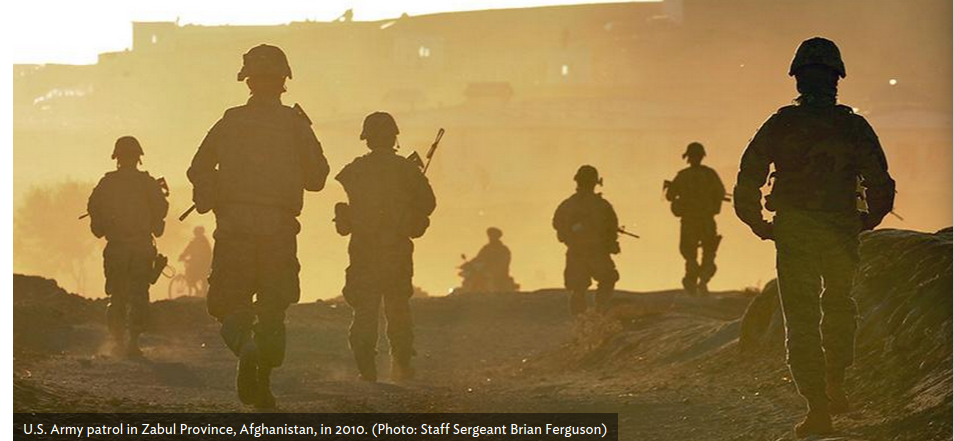
In a completely disturbing article in today’s National Review, Attorney David French chronicles how U.S. troops are made to look the other way while Muslim men rape young boys. Even though our troops could protect these little ones they are forbidden because raping little boys is part of the “honor” culture  – and because we as Americans have lost our Christian footing whereby Christ commands us to protect the least among us.

It’s not an open secret, because no one makes any effort to hide it. Men drape themselves around preteen boys, brag about the beauty of their young sex slaves, and abuse them so systematically and thoroughly that these boys often grow up without even realizing there is an alternative to their homosexual experience.

Read more at: http://www.nationalreview.com/article/424391/afghanistan-child-rape-american-troops

So why do they do it?   For two reasons.

First, as Dr. Nabell Qureshi, a former devout Muslim explains, one’s religious doctriines have consequences.  And in Islam the doctrine of Allah holds that Allah is a demanding deity removed from his creation who commands obedience for those who follow him and destruction for those that don’t.  Contrast with the Christian God Who commands love for neighbor and even enemy.  Such a stern doctrine of god has the following consequences:  it sets a stern example to be emulated; it promotes a male power structure that cannot be questioned and it creates an underclass (i.e. women and children) who must be subject to the male, just as the male is subject to this vindictive deity.

Second, the prophet Mohammad, whom the Quran (33:21) says is an “excellent pattern” to follow, married a six year old girl and began having sex with her when she was only nine.  That is why no Muslim country in the world has a law against raping children – because it would contradict the “excellent pattern” of the very prophet of Allah.

So a Muslim President (perish the very thought!) would not be able to enforce the laws of the United States with regard to the saftey of our children.  If he were to do so, he would undercut the very thing that made him a Muslim – belief in the Quran and Mohammad – and that is not possible.

What does “mischief in the land” mean in the Quran?

21 Monday Sep 2015

Posted by Paul Bassett in Uncategorized

≈ Leave a comment

Tags

Islam, Mischief, Quran

Yesterday I posted 5 Reasons a Muslim Can Never Be President of the U.S.  That caused a Muslim visitor (I presume they are Muslim) to question my use of Quran 5:33 which says that people who don’t believe in Islam should have their hands and feet cut off.  The objection given was that “mischief” applies only to criminals.  (I guess in Islam its ok to mutilate criminals.  It’s all part of the “religion of peace” thing.)

But the phrase “mischief in the land” actually applies to those who do not believe in Islam.  So a Muslim could never be President of the U.S. because he would have to cut the hands and feet off 300 million non-Muslims.

If you want to verify this claim, please feel free to do so.   Sunni Islam comprises over 85% of the world’s Muslims and one of their authoritative texts, Tafsir Ibn Kathir.  This tafsir says the following:

Their mischief is disobeying Allah, because whoever disobeys Allah on the earth, or commands that Allah be disobeyed, he has committed mischief on the earth.

Maybe whitemagicknives can offer some justification for their claim.

Five Reasons a Muslim Can Never Be President of the U.S.

20 Sunday Sep 2015

Posted by Paul Bassett in Acts 17, David Wood, Islam, Quran

≈ 8 Comments

Tags

Islam

This morning on Meet the Press, Chuck Todd was exorcised no small amount that Dr. Ben Carson said that a Muslim should not be President of the United States. Apparently Chuck has never studied Islam, the Quran or American history. So, in order to help Chuck better assess Dr. Carson’s correct inclinations, here are just five reasons no Muslim should ever be our President.

1. We hold these truths to be self evident, that all men are NOT created equal.

Our entire governmental system is based on the presupposition that “all men are created equal”. A Muslim President would have to deny this. The Quran (98:6) says that people who do not believe in Islam are less important than bugs. The exact wording is that “non-believers are the worst of all creatures”. Non-believers are, of course, the 300 million of us who live in the United States that are not Muslim. In order for a Muslim President to enforce the laws of the United States which protect non-Muslims, he would have to commit the Islamic sin of shirk. The funny thing about shirk is that, according to Islam, it is a capital offense. Therefore, a Muslim President of the U.S. who tried to uphold laws based on our Christian heritage would be committing suicide.

2. A Muslim President would unleash a REAL war on women.

The Quran (4:34) condones wife beating. And the Quran, to a Muslim, is the eternal, perfect, unimpeachable word of Allah. The Quran cannot be questioned without committing shirk which, as we noted above, is a capital offense. You want to see a war on women? Put a man in charge who has authority directly from Allah to beat his wife!

3. Disagree with Islam? You get your hands and feet cut off.

Want tolerance in religion? The Quran (5:33) says that those who “create mischief in the land” (read, disagree with Islam) …they should be murdered or crucified or their hands and their feet should be cut off on opposite sides or they should be imprisoned.

4. Goodbye Gay Pride

The Quran says that Muhammad was an “excellent example” (even though Muhammad tried to commit suicide several times, was deceived by Satan and stole his son’s wife) for anybody who wants to follow Islam – as a Muslim President would. And Muhammad cursed gays and cross dressers. The secondary authority in Islam is the collected writing of Islamic scholars known as the hadith. So Sahih Bukhari (7:72:774) says gays have to be kicked out of the house. Abu Dawud says that those who commit sodomy are to be killed (38:4447,4448). Ibn Majah says “kill the one who does it, and the one to whom it is done.”

Under a Muslim President, life would not be good for gays.

5. Science will Die

The Quran teaches that the sun sets in a mud puddle (18:86) . It teaches that human embryos go through a stage where they are a blood clot (23:14). It teaches that human sperm is created between a man’s ribs and his spine (86:6-7). Since the Quran is “perfect” your kids will be encouraged to learn the “perfect science”.

The Quran verses are listed so you can check them out yourselves at http://www.quran.com

Shared from WordPress

06 Sunday Sep 2015

Posted by Paul Bassett in Uncategorized

≈ Leave a comment

If your town is taking HUD housing dollars, diversity, in the form of third world refugees, is on th… – http://wp.me/p5sGi-vyh

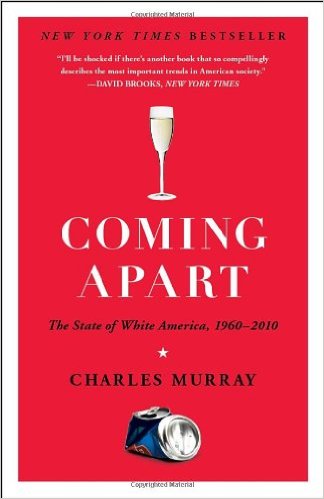
A Book Review: Coming Apart: The State of White America, 1960-2010 by Charles Murray.

31 Monday Aug 2015

Posted by Paul Bassett in Uncategorized

≈ Leave a comment

comingapart“If you only read one book this year….” is the sort of thing that one sees at the beginning of a review of a momentous book, so that phrase is rightly placed here. You will do yourself a favor if you read this book this year – or at any time.

The Baby Boomers who came up during the period under Mr. Murray’s examination are all acutely aware of how different America is today. And the brilliance of Murray’s approach is that he is able to succinctly but thoroughly show how the context of our lives has changed, what is now so very different and what were the causes.

The first evidence of Murray’s genius is in his title. With images of Ferguson or of Baltimore fresh in our minds the temptation may be to add a racial component to any “coming apart” one might describe. But by focusing exclusively on “White America” Murray avoids even the appearance of possible racism. He further deploys extensive statistical evidence to support his conclusions which should assuage any remainder of suspicion. So the result is the description of a bifurcation of American society – that is, “white” American society.

Murray begins his analysis in November 1963 and the assassination of John F. Kennedy which he sees as a line of demarcation. What I found fascinating is his observation of how similar life was then for both the middle class and the “rich”. There were only three television networks. There was typically only one or maybe two newspapers in a town. The movies in the local theaters had to be seen in the week or two they were there or nobody could see them. There was a monotony in local eating establishments that children of a later generation would find “quaint”. The difference is captured wonderfully in a quote Murray takes from David Brooks. Brooks had written about his hometown in Pennsylvania describing it as an “espresso desert” while he was growing up! Now, his town has as many boutique coffeehouses as any other town. So the opportunities available to the rich were as few as those for the rest. This leads Murray to the wonderfully prescient synopsis: “In 1963, the main difference between the old-money rich and everybody else was mainly that they had more money.”

In order to paint a picture of what’s different now, Murray asks his reader to think of attending a parent’s night in an average neighborhood elementary school and then to imagine one at an “elite private elementary school.” He starts with differences in the parking lot and then describes the likely differences in the strollers used by each group and finishes with a description of the parents themselves. The latter group, while driving foreign cars and pushing high dollar strollers bought at baby boutiques are also much more slender and likely to know their cholesterol number. They will be more well informed, less likely to watch TV and please, don’t look for them in a McDonald’s! They will marry later, frequently vacation out of the country and will obsess over every aspect of their children’s lives. In short, a separation of mainstream and rich has visibly occurred.

What were the causes? Murray identifies four: “the increasing market value of brains, wealth, the college sorting machine, and homogamy.” And they all work in an incestuously powerful way. Murray quotes Bill Gates as identifying the ability of “brains” to effect high value impact on a company, thereby driving up the cost of those people so gifted. This produces wealth which produces the ability of more parents to send their children to elite schools in pursuit of more “brains”. The more children attending elite schools means students of both sexes which then are more likely to marry their own kind. Murray uses statistics to show how these “brainy” marriages produce children of higher IQ’s which then, are more attractive to elite schools so the scenario repeats, ad infinitum. These “homogamous” couples are also more likely to settle into zip codes with more of their “kind” which augments the separation of the elite from the mainstream. Murray’s extensive statistical support for these phenomena is fantastic and prevents any skepticism about his conclusions. This separation would not be problematic, per se, save for two attributes of the new elite: they tend to be the new influencers in politics, business and media and they are now almost completely devoid of any knowledge of the other class; a process Murray describes as “balkanization”.

Having outlined the new upper class, Murray turns his analysis to the new lower class. In order to establish a context or framework Murray reflects at some length about the qualities which allowed American to prosper since its founding and he cites four: industriousness, honesty, marriage and religion. Fascinating observations follow about how few people were on the dole, how few were in prison, how important married women are to the social fabric and how religion builds a sense of caring and community which undergirds the whole enterprise. Murray quotes at length from Tocqueville and Grund – two contemporary European observers – as well as several of America’s Founders here. Having established the framework, he then applies modern statistics to show how those four areas have deteriorated so extensively as to produce the lower class of today. But, in a fascinating bit of counterpoint, Murray underlines the fact that the new upper class still exhibits those virtues. That is, they are highly industrious, they stay out of jail, they stay married and they have exhibited a slower decline in “religiosity”.

One drawback I find is Murray’s skittishness in prescribing a solution. Anyone with a basic familiarity of American history will recognize that Murray’s concept of “industriousness” used to be called the “Protestant work ethic.” And the concepts of “honesty”, “marriage” and “religion” were part and parcel of the Calvinist ideology America’s Founders held while forming this country. Even the idea of “community” grew out of the Protestant notion of the “priesthood of all believers” and the organization of society around the local church. If the “coming apart” of our current society is signified by deficiencies in these areas, surely a “coming together” would result by returning to them. Murray seems to imply that the shortcomings in these areas will magically heal themselves as Americans watch the slow suicide of Europe.

Another unfortunate part of this book is the author’s swipe at the sincerity of America’s Founders, at least with regard to their religious convictions. Murray says that, “They (the Founders) went to church, but few of them were devout.” Historic psychoanalysis is always problematic. Besides, this negative focus on a mere handful of individuals obscures the broader picture that 80% of Americans at the time of the Founding were strongly influenced by the teachings of Calvin and more than 70% of the universities were founded on those principles. The focus on these men, even if the conclusion is true, also says nothing about their families which were nearly always “devout”.

One might despair having come this far – and there is reasonable support for this reaction. But Murray ends on rather a high note that points to the light at the end of this tunnel. The light seems somewhat dim and at a considerable distance but Murray is not a pessimist about the outcome – at least in the long run. If you are the slightest bit interested in how our society is changing, I would highly encourage you to read this book.

Each Catholic and his own Magisterium – Protestantism’s Influence on Modern Catholicism

15 Saturday Aug 2015

Posted by Paul Bassett in Catholicism

≈ 2 Comments

Tags

Authority, Catholicism, Magisterium

Crisis of Authority

One of the oft repeated jibes made by Catholics against Protestants is that the religion of the latter has no authority. That religion – Protestantism – merely devolves into what each individual church member believes as he interprets his Bible, alone. It is, in the words of the common retort, merely a religion of “each man and his bible.” The Catholic church is superior, according to adherents of this philosophy, precisely because it has a pope and bishops who can authoritatively interpret not only the Bible, but matters of faith and morals, church practice, etc. The Roman Catholic is thereby relieved of much of the uncertainty which is laid at the feet of Protestantism.

Unfortunately, any conscious person with the slightest interest in the subject knows how damaging the Catholic Magisterium actually is to its own denomination. In this earlier post, I reviewed Professor Leslie Woodcock Tentler’s research showing how the Magisterium had destroyed the Church’s sacrament of Confession.

In a still earier writing, I examined Professor Francis Oakley’s discoveries regarding the Catholic Church’s “institutional forgetfulness” regarding the issue of authority for the Roman Church. Professor Oakley showed how modern Roman Catholics are posed an unsolvable riddle when asked the question, who really is in charge?

So how wonderful it is to continue this series of the examination of what modern Catholic thinking is about what the Magisterium ought to be. Professor Gerald Mannion sets the stage here:

“the Magisterium” has become a concept that has generated as much controversy, division, and fear as it has misunderstanding.i

Think of it. The one thing that that differentiated Roman Catholicism from the dark nether world of Protestantism is now a source of “controversy, division and fear”! What is remarkable here is not only the admission itself but that it could be published by a Fellow of the Catholic University of the Louvain!

But what is even more fascinating is how the Protestant concept of the ‘priesthood of all believers” is proposed as the solution:

So it is upon the church entire and not any particular member of it that this gift of the spirit is bestowed.ii

And Mannion cites another notable Roman Catholic scholar, Fr. Francis Sullivan, S.J., in support here:

 Sullivan believes that when assessing the content, worth, and binding authority of any church document that sets down an aspect of the ordinary magisterium, we should ask five particular questions. First, who is the teaching addressed to? Second, what kind of teaching is it? Third, what kind of document is the teaching contained in? Fourth, what particular level of magisterial authority is employed in the teaching? And, fifth, what sort of language is employed in the teaching? iii

No only do Catholics now publicly challenge the idea of an “infallible Magisterium” which has been the bedrock of Catholicism from time immemorial, it now reserves the right to design the criteria by which the Magisterial pronouncements can be judged. To those of who grew up in the Church it’s all fantastic, really!

Each Catholic and his own Magisterium. The new normal and how Catholicism continually changes contrary to itself.

iMannion, Gerald. “A Teaching Church that Learns? Discerning “Authentic” Teaching in Our Times”. The Crisis of Authority in Catholic Modernity.  ed. Michael J. Lacey and Francis Oakley; New York. Oxford University Press, Inc. 2011 Locations 3473. Kindle eBook.

iiIbid., Location 3508

iiiIbid., locations 3544-3553

Science Cannot “Prove” When Life Begins

07 Friday Aug 2015

Posted by Paul Bassett in Uncategorized

≈ Leave a comment

One of the more misguided comments by prominent Roman Catholics of late is that “Science proves when life begins.”  I am thinking specifically of Bill O’Reilly and Senator Marco Rubio who have both stated this publicly.

Unfortunately, for this to be true, man would have to be only a material being.  If we hold to the traditional view that man is constituted of body and soul, we must allow that science has not a thing to say about the soul.

George Weigel – Making Heros from Heretics

13 Monday Jul 2015

Posted by Paul Bassett in Catholicism, George Weigel

≈ Leave a comment

Tags

Catholicism, George Weigel, John Courtney Murray

It is a source of continuing amazement just how malleable history is for Roman Catholics.  There is apparently no longer even the pretense to objectivity or constancy when representing Catholic history.   Francis Oakley describes this phenomenon as “the empire that the present continues to exert over the past in so much of Catholic institutional thinking” and went on to make this prescient observaton:

Under certain circumstances, moreover, casual forgetfulness (by Catholic institutions) has betrayed a disagreeable tendency to mutate into a proactive politics of oblivion reflective of the Orwellian conclusion that if he who controls the past controls the future, then he who controls the present would be well advised to control the past.1

So it is with great interst that we observe he preeminent Catholic spokesperson of the day, George Weigel reaffirming Oaklley’s thesis in his  recent National Review article    Weigel weighs in on the recent SCOTUS marriage case (Obergefel) by channeling the late Fr. John Courtney Murray.  Weigel captions his article, “What would Father John Courtney Murray say?” and describes the late Fr. Murray as, “one of the intellectual architects of the Second Vatican Council’s Declaration on Religious Freedom and author of what remains today the best Catholic explication of the moral-cultural foundations of the old American democracy, “We Hold These Truths: Catholic Reflections on the American Proposition.””1.  There is no better extant example of historical oblivion than this.

In order to better understand either the tragic or comic nature of Weigel’s prounouncements it will be helpful to review who John Courtney Murray was and how the Roman Catholic Church actually treated him during his lifetime.

A simple Google search will allow the reader to ascertain the bare facts or Murray’s existence. He was born in 1904, was highly educated at an early age, became a Jesuit priest in 1933 and went on to earn advanced degrees in Rome.  And Murray’s area of special interest was how Roman Catholics could make sense of the American political system.  Why did that require the efforts of so great a scholar?  Because the American political system was described as “very erroneous” by Pope Leo XIII. and condemned as heresy.  (Google ‘Heresy of Americanism” and you will find lots of information.)  So how, exactly, were Americans to exist under a political system condemned by the pope?  Enter, John Courtney Murray.

Whle it is beyond our present scope to outline Murray’s thought on the topic, it is necessary to describe how vehemently and vociferously the Roman Catholic Church opposed his work and used every trick possible to thwart Murray in his teaching, speaking and writing.

Americans in the first half of the 20th century were well aware of Catholic doctrine regarding church-state relations.  They were also well aware of the disaster that this doctrine had wreaked on Italy, Spain and other heavily Catholic countries.  Fr. Murray, realizing this, understood that ecumenical cooperation was indeed necessary for Catholic progress in the U.S.  In 1943 he sought permission to address an ecumenical group at Jewish Theological Seminary in New York. Such permission was denied by the auxiliary bishop for the Catholic archdiocese of New York.  Later speeches given by Murray were shadowed by professors from the Catholic Univeristy in America and from other Catholic seminaries. The end result was that the Vatican working through American Catholic universities had Murray’s books pulled from the shelves and, working through Murray’s Jesuit superiors, had his speeched banned and his further printing contracts cancelled.  Murray was essentially forbidden to speak or write further because of his “heretical” views and became persona non grata to the Catholic world.  Murray was predictably banned from attending the Second Vatican Council

There is one more very interesting twist to the story and that has to do with the rise of America’s first Catholic President, John F. Kennedy.  Murray was well known to the Kennedy clan and, if memory serves, was actually sought out as an adviser to the then Senator’s Presidential campaign.  That fact put theVatican in an extremely precarious position. If they persisted in forcing Murray into the Gulag, it would look bad at precisely the time a Catholic was poised to become President of the most powerful country on earth.  Realizing the terrible optics that Rome had created for the American political situation, Cardinal Spellman had to intervene to get Fr. Murray out of his ghetto and on to the Vatican Council – which he did.  However, Murray was not in attendance until the Second Session of Vatican II.  (Oh, to have been a fly on the Vatican wall at that time!)

So I hope the reader will see with me that when Weigel goes on to muse about how Murray might have “counseled the bishops” of America, he is engaging in the worst sort of anachronism.  Murray was not even allowed to “counsel” college students let alone bishops.  When Weigel begins his essay, “What would Father John Courtney Murray say?” he exits the bounds of Catholic propriety by openly contradicting the Magisterium.  And when he refers to Fr. Murray as the “architect” of anything with regard to the Vatican Council II, he ignores how the Vatican did what it could to preclude his very presence.

Maybe some knowledgeable Catholics will stand up and correct Weigel before he draws more discredit to Catholic historical research.

====================================================

1 Oakley, Francis.  History and the Return of the Repressed in Catholic Modernity: The Dilemma Posed by Constance in “The Crisis of Authorityin Catholic Modernity” ed. Lacey, Michael J. and Francis Oakley.  New York: Oxford University Press; 2011.  Kindle Location: 677

1 http://www.nationalreview.com/article/420711/obergefell-catholic-church?target=author&tid=900911

The Supreme Court and the Roman Catholic Magisterium

01 Wednesday Jul 2015

Posted by Paul Bassett in Catholicism, Christianity, Founding Fathers, SCOTUS

≈ Leave a comment

Tags

America's Christian Heritage, American Founding, Catholicism

Last week’s Supreme Court rulings present an excellent example in the damage the Roman Catholic Magisterium can wreak on society. It will be remembered that in on case before the Court (the Burwell,or Obamacare case) the Court held that the word “State” did not really mean “State” but something else. In the second case (the gay “marriage” case) the Court said that the protections of the 14th amendment applied to those who wanted to marry the same sex – even though every State of the Union at time of the adoption of the amendment defined marriage as only occurring between opposite sex couples. How can that happen?

To understand this better, one needs to review American history.

This country was founded squarely on Protestant principles. According to one historian, “80 percent of American Christians in the colonial period…were significantly influenced by John Calvin’s teachings.” And those teaching would have included the doctrine of Sola Scriptura. In addition to proclaiming the infallibility of God’s written Word in providing moral guidance to God’s people, this doctrine elevated the importance of the written word and minimized the importance of outside interpreters. The further influence of this theology emphasized the importance of covenants, or written contracts. The Apostle Paul’s admonition to the Corinthians – “Do not go beyond what is written” (1 Corinthians 4:6) – is one example of this line of thinking. This is also why the Supreme Court was given a little thought in the founding era of this country. After all, if judges who had been trained in Calvinism, Covenant theology and Sola Scriptura would surely rely on the written law and not on a “penumbra of rights” or other ephemeral things. When the Congress passed a law that says “States” that is what they meant.

Roman Catholics, on the other hand, reacting against Protestantism departed from this ancient Christian teaching. According to the Catholic Catechism, the bishops of the Catholic Church have been given“(t)he task of giving an authentic interpretation of the Word of God”. (CCC para. 85 ff.) And while the catechism says that the Magisterium “is not superior” to the Scriptures the fact remains that the final word belongs to human beings and their subjective interpretation. That is why so much of Catholic theology is built on the teaching of men and not the teaching of the Bible.

So here’s the connection with last week’s SCOTUS opinions.

6 of 9 justices on today’s court are Roman Catholics. Having been raised in a tradition which defers to a human body that gives “authentic interpretation” to the laws, its’ only natural that they relied on their own judgment, rather that the written law. After all, Catholic theological history is littered with contradictory doctrines and topsy-turvy teachings precisely because of this.

So when a court dominated by Roman Catholics says, “States” means something else and they invoke an amendment that was passed by states that all defined marriage a heterosexual union in support of homosexual “marriage”, they are only doing what the Magisterium has been doing for time immemorial. One can think of papal pronouncements against slavery all the while Jews were enslaved in the Papal States. Or one is reminded of the Magisterium’s decree that Councils are superior to popes in 1418 which was reversed in 1870 by a Council that anathematized anyone who believed thusly! Or Pope Leo’s making “official” the teaching of Thomas Aquinas which included that a fetus is not immediately human contrasted by today’s Magiesterial hysteria about life beginning at the “moment of conception”.

The Founding Fathers were suspicious of this behavior so as to even prevent Catholics from voting in this new country. Now that Catholicism has gone mainstream, and that there are 66 million American Roman Catholics, this behavior, although shocking, is entirely understandable. America has found its Magisterium!

← Older posts
Newer posts →

Goodreads

Recent Posts

  • A Book Review: “The Refashioning of Catholicism, 1450-1700: A Reassessment of the Counter Reformation” February 3, 2026
  • A General Theory about the 2020 Election Fraud July 9, 2021
  • Why the Roman Catholic Church MUST canonize Donald Trump June 16, 2018
  • What Everyone Needs to Know about the Paris Climate Accords June 14, 2017
  • Greg Bahnsen – an homage December 11, 2015

Archives

  • February 2026
  • July 2021
  • June 2018
  • June 2017
  • December 2015
  • November 2015
  • October 2015
  • September 2015
  • August 2015
  • July 2015
  • June 2015
  • May 2015
  • March 2015
  • September 2014
  • July 2014
  • June 2014
  • May 2014
  • April 2014
  • March 2014
  • February 2014
  • December 2013
  • October 2013
  • July 2013
  • June 2013
  • May 2013
  • April 2013
  • March 2013
  • February 2013
  • January 2013
  • December 2012

Categories

  • Abortion
  • Acts 17
  • America's Christian Heritage
  • Andrew McCarthy
  • Apologetics
  • Armnianism
  • Authority
  • Bryan Cross
  • C2C IP
  • Caste system
  • Catholicism
  • Charles Chaput
  • Christianity
  • Climate Change
  • Darryl Hart
  • David Wood
  • Edgardo Mortara
  • Elections
  • Eucharist
  • Founding Fathers
  • Freedom
  • Garry Wills
  • George Weigel
  • Greg Bahnsen
  • Hermeneutics
  • Islam
  • Jihad
  • Kidnapping
  • Matthew 16
  • Movie Reviews
  • Papacy
  • Paris Climate Accords
  • Pat Buchanan
  • Quran
  • Raymond Brown
  • Reformation
  • Religious Freedom
  • Roger Olson
  • Roman Catholicism
  • SCOTUS
  • Trent
  • U S Constitution
  • Uncategorized
  • Unity
  • William Donohue

Meta

  • Create account
  • Log in
  • Entries feed
  • Comments feed
  • WordPress.com

Blogs I Follow

  • anactofmind
  • Roger E. Olson
  • The Gospel Coalition
  • The Heidelblog
  • The Jagged Word
  • "In verbo veritatis" (2 Cor 6:7)
  • Old Life
  • Glass House
  • My Blog
  • Return to Rome
  • Mark D. Roberts
  • Called to Communion
  • Larry Hurtado's Blog
  • Societas Christiana (2.0)
  • John Calvin Quotes
  • The Lonely Pilgrim
  • Reformation500
  • Viewpoint
  • Beggars All: Reformation And Apologetics
  • WordPress.com News

Create a free website or blog at WordPress.com.

anactofmind

If there is anything in the world that can really be called a man's property, it is surely that which is the result of his mental activity. - Arthur Schopenhauer

Roger E. Olson

If there is anything in the world that can really be called a man's property, it is surely that which is the result of his mental activity. - Arthur Schopenhauer

The Gospel Coalition

If there is anything in the world that can really be called a man's property, it is surely that which is the result of his mental activity. - Arthur Schopenhauer

The Heidelblog

Recovering the Reformed Confession

The Jagged Word

Where the sacred & profane collide

"In verbo veritatis" (2 Cor 6:7)

Thoughts and writings of Fr. Joseph A. Komonchak

Old Life

If there is anything in the world that can really be called a man's property, it is surely that which is the result of his mental activity. - Arthur Schopenhauer

Glass House

My lies will get better

My Blog

If there is anything in the world that can really be called a man's property, it is surely that which is the result of his mental activity. - Arthur Schopenhauer

Return to Rome

If there is anything in the world that can really be called a man's property, it is surely that which is the result of his mental activity. - Arthur Schopenhauer

Mark D. Roberts

If there is anything in the world that can really be called a man's property, it is surely that which is the result of his mental activity. - Arthur Schopenhauer

Called to Communion

Reformation meets Rome

Larry Hurtado's Blog

Comments on the New Testament and Early Christianity (and related matters)

Societas Christiana (2.0)

If there is anything in the world that can really be called a man's property, it is surely that which is the result of his mental activity. - Arthur Schopenhauer

John Calvin Quotes

The Lonely Pilgrim

A Christian's Road Home to Rome and Journey Onward

Reformation500

Viewpoint

If there is anything in the world that can really be called a man's property, it is surely that which is the result of his mental activity. - Arthur Schopenhauer

Beggars All: Reformation And Apologetics

If there is anything in the world that can really be called a man's property, it is surely that which is the result of his mental activity. - Arthur Schopenhauer

WordPress.com News

The latest news on WordPress.com and the WordPress community.

Privacy & Cookies: This site uses cookies. By continuing to use this website, you agree to their use.
To find out more, including how to control cookies, see here: Cookie Policy
  • Subscribe Subscribed
    • anactofmind
    • Already have a WordPress.com account? Log in now.
    • anactofmind
    • Subscribe Subscribed
    • Sign up
    • Log in
    • Report this content
    • View site in Reader
    • Manage subscriptions
    • Collapse this bar
 

Loading Comments...